

























































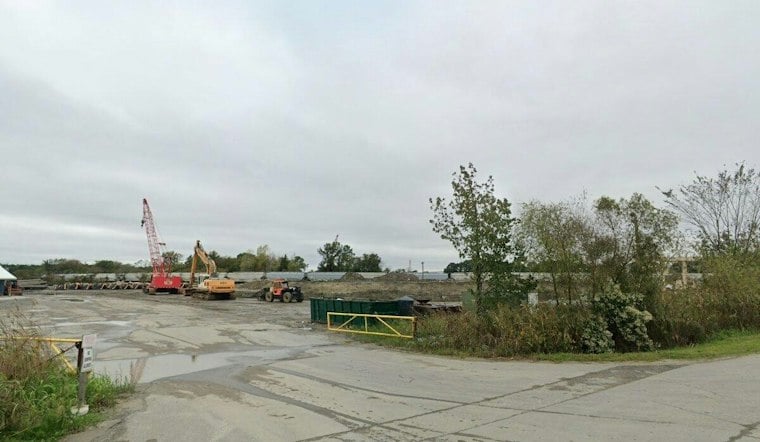
Workers unloading dredged material from a commercial barge at 5360 Bainbridge Point in Chesapeake made a grim discovery on November 18, 2024: a human skeleton with no skull, no soft tissue, and no obvious way to trace where it came from. More than a year later, Chesapeake police and state forensic investigators still do not know who the man was or where his remains entered the water.
A Barge, a Blue Sweatshirt, and Few Other Clues
According to WAVY.com, the remains surfaced after the barge docked and crews began unloading sediment it had carried south. The vessel is believed to have traveled from the Pennsylvania region, accumulating material along a northern corridor that extends into that state, though investigators have not pinned down exactly where along that route the remains may have entered the load. Lara Newell, the long-term unidentified coordinator for the Virginia Office of the Chief Medical Examiner, has been blunt about the uncertainty, saying investigators do not know where the remains were picked up.
Forensic specialists were unable to recover a complete skeleton from the site, retrieving only a torso and a handful of long limb bones from the arms and legs. The skull was entirely missing, the station's report notes, because the body was fully skeletonized by the time it was found, leaving no soft tissue and no dental records or fingerprints for examiners to work with. The medical examiner has classified the cause of death as undetermined.
What Forensic Testing Has Revealed So Far
DNA testing identified the deceased as a man, and a forensic anthropologist estimated his age at between 25 and 45 years old. He has been described as a white Caucasian male, and Newell estimated his height at between 5 feet 4 inches and 6 feet, per the same account.
Investigators have zeroed in on a blue sweatshirt found on the torso, which bore the name of Superior Moving Company. The station's report says 10 On Your Side contacted the Superior Moving location in Philadelphia, where a manager confirmed the business had received inquiries about the apparel but said there were no additional details to share. Forensic personnel have not determined whether the man worked for the company or whether he obtained the sweatshirt some other way; Newell said it could have belonged to a former employee or been acquired secondhand.
Genetic Genealogy Offers a Possible Path Forward
The medical examiner's office has submitted recovered genetic material to federal authorities and specialized genealogy researchers, and genetic markers have been entered into the national DNA database for comparison against missing-person registries and other unidentified remains, with the goal of connecting the case to a family or to additional remains from the same person. Newell has also provided case files to Compass IGG & Advocacy, a pro bono investigative genetic genealogy research organization that may help identify the man through that same technique.
Despite those efforts, Newell has reported no significant updates in the case. The Virginia Office of the Chief Medical Examiner currently has roughly 326 unidentified cases across the state, a backlog that underscores how difficult identification can be without a skull or other distinguishing physical evidence.
Other Virginia Cases Show How Long Answers Can Take
Unidentified remains cases in the region have sometimes taken decades to resolve. In one case, the Virginia Beach Police Department asked for the public's help identifying a woman whose remains were discovered 50 years earlier near the Chesapeake Bay Bridge-Tunnel, according to a separate WAVY.com report. Elsewhere, DNA advancements eventually helped identify remains found in Tennessee's McMinn County in 1991 as belonging to a North Carolina man, as reported by WATE.com. For now, the man found aboard the Bainbridge Point dredging barge remains nameless, with investigators hoping that DNA databases and genetic genealogy can eventually succeed where dental records and fingerprints cannot.


