

























































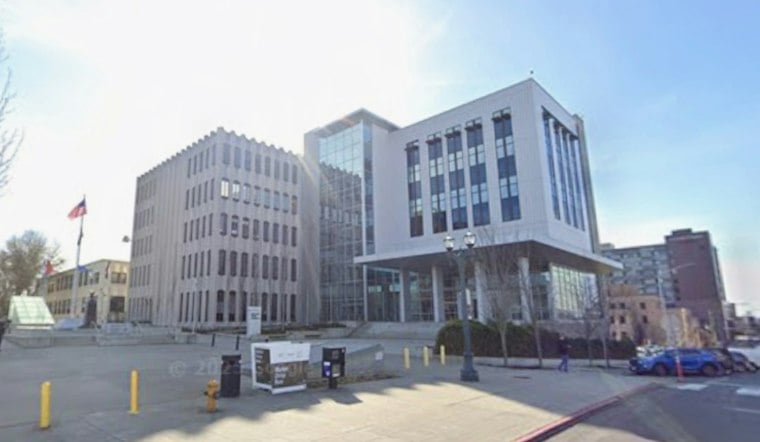
The Snohomish County Council voted 3-2 Tuesday to approve a $3.37 billion budget for 2027-28, capping a six-hour meeting with a spending plan that raises surface-water fees on homeowners, phases in a steep jail booking-fee increase for cities, and leans on only modest property-tax growth rather than tapping banked taxing capacity the county had available. Council members Megan Dunn, Jared Mead and Strom Peterson voted yes; Sam Low and Nate Nehring voted no.
A Budget Built From a $56 Million Hole
The vote caps months of wrangling that began when County Executive Dave Somers presented his proposed budget to the council in September, according to HeraldNet. The county was facing a projected two-year deficit of $56 million, and Somers’ original proposal included roughly $22 million in across-the-board cuts over two years along with a property-tax increase of more than 6% over the biennium, the outlet reported. The adopted budget is about 4.6% higher than the prior $3.22 billion biennial budget, per the same report, though Lynnwood Times put the increase at 4.66% over the previous 2025-26 budget — a discrepancy neither outlet reconciled.
The approved spending plan includes a general fund — the county’s most flexible source of money — of more than $780 million, the station’s report notes. Somers’ original September proposal had pegged the general fund slightly higher, at $786.6 million, according to My MLT News, which also reported that his proposed property-tax revenue options would have added about $41 per year for an average-valued $741,000 home.
Council Skips Banked Capacity, Still Raises Taxes
Rather than follow Somers’ recommendation to use all of the county’s banked property-tax capacity alongside the standard 1% annual increase, the council approved only the standard 1% increases each year, the HeraldNet account states. Snohomish County had about 4.3% in banked capacity available under state law, which allows a county’s general-fund property-tax portion to rise 1% annually, per the same report. About 6 cents of every property-tax dollar flows into the county’s general fund, with another 4 cents going to the roads fund, the outlet explained.
The council also approved a 1% increase to the roads levy and a 1% bump to the conservation futures levy, the latter expected to generate more than $930,000 in 2027. Combined with new rates set for the veterans relief and developmental disabilities and mental health levies — 1.8 cents and 2.5 cents per $1,000 of assessed value, respectively — the new rates are expected to add about $26.90 per year in property taxes on a median-priced $741,000 Snohomish County home, the article notes.
General Fund Levies Pulled Out, Over Nehring’s Objection
A notable fight centered on the veterans relief and developmental disabilities and mental health levies. The budget could have dedicated $8.7 million in general-fund money to meet the new levy rates, but the council instead approved Somers’ proposal, in a 3-2 vote, to remove those two levies from the general fund entirely. Nehring argued the council could have legally rejected that ordinance and cut the $8.7 million from the general fund instead, according to the same account.
Nehring also characterized the overall tax and fee picture more broadly in comments reported by Everett Post, saying the council chose to approve more than $24 million in additional property taxes built into the budget. Figures on the surface-water fee increase diverged between outlets: Lynnwood Times quoted Nehring citing $10 million in increased Surface Water Management fees for 2027-28, while Everett Post reported the figure as $10.5 million — neither outlet reconciled the difference.
Homeowners and Cities Both Feel the Fee Hikes
Surface-water fees are rising regardless of which total is used. The annual surface-water management fee for a single-family home will increase by $57, from $122 a year to $179 a year, HeraldNet reported.
Cities that rely on the county jail for non-felony bookings also got relief from an earlier, steeper proposal. An August plan would have raised the non-felony booking fee from $151.61 to $353.61 in 2027 — a 134% increase — and to $369.09 in 2028, HeraldNet reported at the time. The council instead unanimously approved an amended increase, lowering the 2027 booking fee to $272, rising to about $325 in 2028. A separate phase-in schedule has cities paying 60% of the full rate in 2027, 80% in 2028 and the full rate by 2029, according to Everett Post’s separate report on the phase-in.
The council also reduced proposed increases to the Office of Public Defense’s conflict-panel and expert-witness budgets by about $2 million per year, trimming back another piece of Somers’ original proposal. Those changes came after the council had already acted this past August, approving a 0.1% sales-tax increase for criminal-justice purposes and a $20 car-tab fee meant to help close a separate $9 million Public Works deficit.
Council Members Defend a Contentious Process
Council members weighed in on both the substance and the process. Dunn described the budget process as transparent, fair and organized, saying the council found common ground, voted on disagreements and collaborated on important issues. The council considered 25 budget amendments before reaching its final version, per the reporting.
Mead said the passed budget was better than Somers’ September proposal, calling it a reflection of compromise and bipartisan work. He had proposed directing all $700,000 of his annual real estate excise tax allocation into the roads fund; each council member receives $140,000 annually in real estate excise tax funds for capital projects, parks and roads, amounting to $1.4 million in council-member allocations over the two-year budget.
What Happens Next
The budget’s fate now rests with Somers, who must decide whether to sign or veto the council-approved plan. As of Thursday morning, Executive’s Office spokesperson Kari Bray said the office had still not received the finalized budget from council staff, and that once it arrives, staff will spend a few days reviewing the council’s amendments. Everett Post reported that Somers’ signature is considered the next step to finalize the new budget, though the outlet did not report an outcome.




