

























































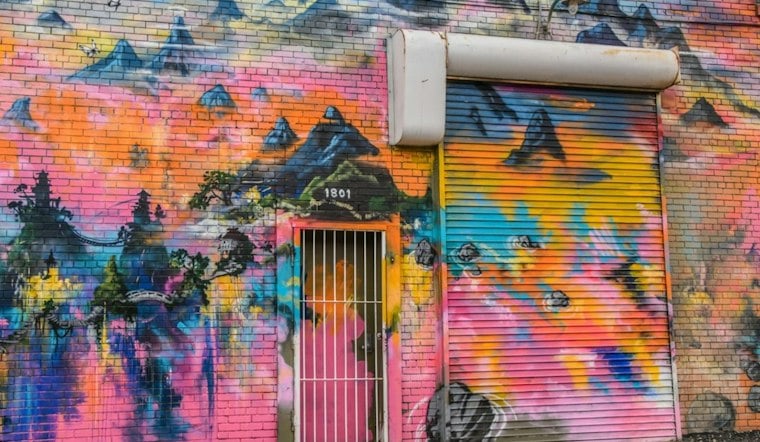
A sprawling new mural corridor is rising along Lonyo Street in Southwest Detroit, where nonprofit arts group Garage Cultural has teamed up with Ferrous Processing and Trading to turn more than 45,000 square feet of industrial walls into a public gallery of neighborhood history. The project, centered at 3100 Lonyo Street, is expected to be finished by spring 2027.
The partnership marks Southwest Detroit's first mural corridor, according to Metro Detroit News, which reports that Garage Cultural assembled a roster of internationally recognized and local artists for the effort, including Dasic Fernandez, Cekis, SW Freddy, Richie Blanko and Mila Lynn. Gabriel Durán, a representative of Garage Cultural, said the collaboration aims to elevate Southwest Detroit's history, culture, legacies and community stories. Durán added that the project is meant to uplift neighborhood pride and help residents see themselves reflected in the murals.
A 600-Foot Centerpiece Honoring Neighborhood Roots
One of the corridor's anchor pieces, The Great Wall of Southwest, was created by Mila Lynn and Richie Blanko and stretches 600 feet, paying homage to Southwest Detroit's spiritual, environmental and automotive histories. The mural weaves in ofrendas, graffiti-inspired lettering and imagery drawn straight from the neighborhood. Lynn said the piece was designed as a welcoming landmark that reflects the people and history of the area; the artists' shared intention was to capture experiences, history and cultural identity that residents would recognize as their own.
Lynn also said beautification projects like this one should involve artists with integrity and real roots in the community, a sentiment that echoes Garage Cultural's broader track record. Founded in 2011, the nonprofit has made it its mission to uplift the Latin American cultural roots of Southwest Detroit, according to modeldmedia.com. Amelia Duran, speaking to the outlet, said the organization began producing large-scale public art in 2010.
Automotive History Meets a Message of Sustainability
Elsewhere along the corridor, a piece called Driving the Future was created by SW Freddy with supporting artist Jay Kopicki. The mural incorporates Detroit's cultural identity, Ferrous Processing and Trading's own history, and themes around the future of sustainability. SW Freddy said tying the mural work together felt like a full-circle moment, and he added that public art can connect corporations with communities while offering education and inspiration across generations.
A third piece, a floral-inspired mural blending nature and science, was created by Cekis, Dasic Fernandez, Freddy Diaz, Mauricio Arenas and Jay Kopicki, with five artists working on it over the past month. Cekis, a native of Chile, said his work represents life and aims to depict transformation, change and rebirth. Garage Cultural is sharing updates on the corridor through its Instagram account and its website, garagecultural.org.
Part of a Longer Pattern of Community Murals
Garage Cultural's push for large-scale public art isn't new. Its Art on the Block initiative, created in 2010, has already commissioned more than 20 murals around the community, according to elcentralmedia.com. The organization also secured a $250,000 grant from ArtPlace America in 2017 to plan a community art and creative incubator space called NOIS, per the same coverage from modeldmedia.com. Among its past work is a commemorative mural honoring Frankie “Panchito,” a lifelong community resident affectionately known as The Mayor.
Southwest Detroit's new corridor isn't the only large-scale mural effort reshaping the city's walls. In Detroit's Islandview neighborhood, a mural project covering 15,000 square feet of surface on Beaufait Street between Charlevoix and E. Vernor has drawn together 30 artists working on one long wall, according to fox2detroit.com. In nearby Mexicantown, more than two dozen large-scale paintings by artist Elton Monroy Duran already line the neighborhood's walls, as afar.com has reported, turning that stretch of the city into something of an outdoor gallery in its own right.
The Double Edge of Neighborhood Beautification
Garage Cultural's own leadership has acknowledged the complicated side effects of this kind of work. Duran told modeldmedia.com that public art meant to respond to disinvestment can also end up making communities more appealing to outside developers. In the same interview, Duran put it more starkly, saying that a tool built for the community can, in some ways, become something that attracts the very forces with the potential to do it harm.
That tension sits in the background of a project built, by Garage Cultural's own account, to center the people who already call Southwest Detroit home. Whether the corridor follows the pattern Duran described remains to be seen, but for now the walls along Lonyo Street are telling a story written by the neighborhood's own artists, ahead of the project's expected completion in spring 2027.




