

























































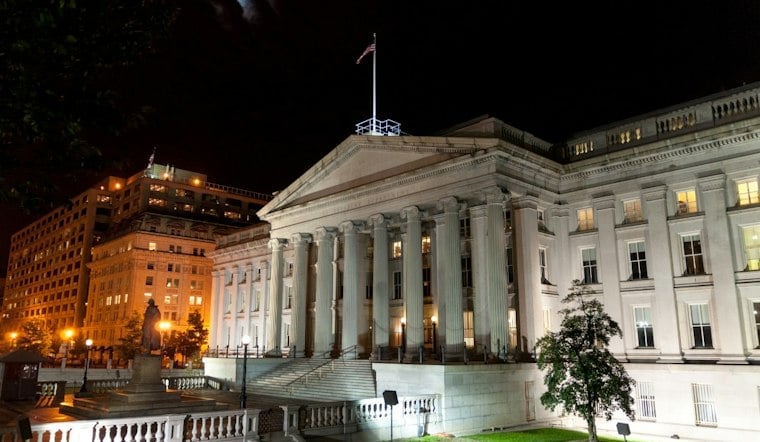
Treasury Secretary Scott Bessent has recently moved from his home to a military base following threats against his life attributed to Iran, according to three people with knowledge of the matter. The severity of those threats remains unclear, and the shift comes as U.S. officials say Iranian plotting against American officials has entered a more advanced stage.
The move was first reported by The New York Times, which cited sources describing Bessent's relocation from his home to a military base after threats tied to Iran. The Times reported plainly that “the severity of the threats to him is unclear.” A Treasury Department spokesperson told the paper that Bessent “will not be deterred by the Iranian regime's threats,” and remains committed to the administration's campaign to squeeze Iran's economy.
According to the same report, U.S. officials concluded in recent weeks that Iranian plotting against current and former American officials had reached a more advanced stage, based in part on intelligence tied to the threats against Bessent. Since August, Bessent has led an economic pressure campaign aimed at isolating Iran financially through tougher sanctions and restrictions on trade routes, the newspaper's sourcing indicates. The original wire version of this story, carried by the Kansas City Star, notes that Bessent has been the face of Washington's economic pressure campaign against Tehran during the broader U.S.-Israeli war on Iran, which began in late February.
A Pattern of Officials Moving to Protected Housing
Bessent is not the only senior official to leave a Washington-area home for secure quarters. The same Times reporting states that at least half a dozen senior Trump administration officials did so last year, including Stephen Miller and Attorney General Pam Bondi. The Independent separately reported that Bondi was moved out of a Washington, D.C., apartment after federal law enforcement officials flagged threats against her, relocating her to secure housing on a military base in the area.
That outlet also noted that such arrangements have precedent beyond the current administration: during President Trump's first term, Mike Pompeo similarly stayed on a base, as did then-Defense Secretary James Mattis, according to The Independent. The wire account from the Kansas City Star adds that U.S.-Israeli strikes on Iran and Israeli attacks on Lebanon have killed thousands of people and displaced millions since the war began, with American and Israeli attacks killing top Iranian officials, including Supreme Leader Ayatollah Ali Khamenei. Iran has denied plotting to attack officials and people on U.S. soil, that reporting states.
Aircraft Pulled From British Base as Threat Deemed Credible
The reported relocation of Bessent follows other recent moves tied to Iran-linked threat assessments. Flight-tracking data analyzed by CNN showed that 10 U.S. refueling aircraft were relocated away from RAF Mildenhall in Britain this past Monday, moved to bases in Germany and Spain as well as Glasgow Prestwick airport. A person familiar with the intelligence told the network the aircraft were evacuated after a threat from Iran that was deemed credible.
CNN also reported that a source familiar with the intelligence described “varied, extensive, and specific” plots being discussed by Iranians against American targets, though it remained unclear whether Iran could actually carry them out. U.S. officials have separately noted that Iran's ability to conduct large-scale attacks within the United States and other overseas territories is limited, per the Times reporting.
Months of Warnings About Iranian Intentions
The warnings predate this week's developments. Reuters reported in April that the FBI had warned state and local law enforcement of an elevated threat posed by Iran's government to targets inside the United States, drawing on a March 20 intelligence report. That assessment said the Iranian government posed a persistent threat to U.S. military and government personnel and buildings, Jewish and Israeli institutions, and Iranian dissidents in the U.S., though it added that federal agencies had not identified broad threats to the American public, according to Reuters.
An earlier Department of Homeland Security assessment cited by Reuters found that Iran and its proxies probably posed a threat of targeted attacks in the United States following Khamenei's death, while judging a large-scale physical attack unlikely. More recently, a U.S. intelligence memo to Secretary of State Marco Rubio dated October 23 found that Iran had substantially increased its efforts to target American diplomats and officials in the Middle East and beyond, with lethal plots reaching advanced stages, according to Axios. A senior intelligence official in the Trump administration issued a similar warning in a memo reviewed by Reuters the same month, saying Iranian lethal plots against American citizens had reached advanced stages.
The U.S. Treasury Department had not immediately responded to a request for comment on Bessent's reported relocation, according to the wire report distributed by the Kansas City Star. As of now, the specific base where Bessent is staying, the exact date he relocated, and the underlying intelligence behind the threats against him have not been disclosed in available reporting.




