

























































Wake County's online arrest record portal isn't shutting down after all, but it's about to look very different. Starting Nov. 23, the site will show only the last 30 days of arrests, and mugshots will disappear from the page entirely, with that older information shifted to a pair of public kiosks in Raleigh, according to county officials.
Wake County officials announced the decision to keep the arrest website online, with changes, on Monday, reversing course from an earlier plan to take the portal down altogether, according to CBS 17. Officials said the information contained in each arrest record will remain unchanged; what's changing is how long it stays visible online and where the public can find it. The county said it spent more than 60 days listening, discussing and planning before settling on the new approach, aiming to keep public information accessible while limiting the spread of records that may no longer be accurate.
Two Kiosks Replace the Single Downtown Plan
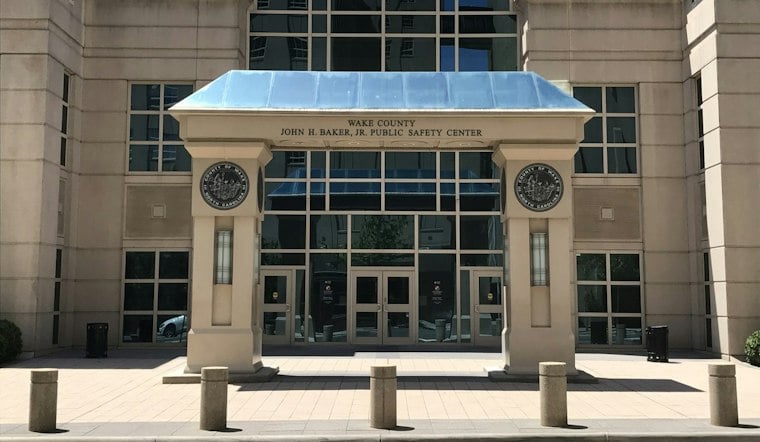
Under the new arrangement, arrest records older than 30 days, along with mugshots, will be available at two public kiosks in Raleigh rather than online, per county officials. One kiosk sits in the main lobby of the John H. Baker Jr. Public Safety Center at 330 S. Salisbury St., open 8:30 a.m. to 5 p.m. on weekdays except holidays. The second is on the zero level of the Wake County Detention Center at 3301 Hammond Road, across from the magistrate's office, and that one runs 24 hours a day, seven days a week, including holidays.
That two-kiosk setup is a shift from an earlier plan, which called for arrest information to be accessible from a single kiosk in downtown Raleigh. The earlier version of the plan, tied to the Wake County Sheriff's Office, had the bureau saying information would be available from that kiosk after the website came down, the station's report noted. Instead, the website is staying up, and the public now gets two physical access points instead of one.
Why the Original Shutdown Date Kept Slipping
This isn't the first time the plan has changed. The Wake County Bureau of Forensic Services had said it would deactivate the online portal in July, and an earlier version of that plan, reported by The News & Observer, set an Aug. 17 deactivation date. Officials postponed the closure on Aug. 12, five days before the scheduled date, to an unspecified future date. By the time CBS 17 checked back in, the bureau said a new deactivation date had not yet been announced.
At the center of the delay is a tension between record-keeping and data accuracy. The Second Chance Act allows some arrests to be automatically removed by North Carolina courts, but local courts don't always provide that expungement data back to Wake County, according to earlier reporting. Sam Pennica, with the Wake County Bureau of Forensic Services, said as much directly: “they don't always know to update their records,” leaving a risk that cleared cases could linger on the public-facing site. The bureau had planned to prevent people whose records were cleared under the Second Chance Act from continuing to appear on the website, and the shift to a rolling 30-day window appears aimed at addressing exactly that problem.
The Scale of Automatic Expungements Statewide
The scope of the issue is sizable. The director of the Wake County Bureau of Forensic Services said 1.8 million automatic expungements had occurred statewide since the Second Chance Act took effect, according to The News & Observer's earlier reporting. On top of that, the bureau processes roughly 5,000 court-ordered expungements a year. With that much churn in the records, officials have pointed to the gap between what courts clear and what the county's systems actually reflect as the practical driver behind pulling older data off the open web.
Wake County does still accept online requests for records more than five years old, offering another avenue for people seeking older information without a kiosk visit. It's also worth noting that this portal is distinct from North Carolina's eCourts system, which separately offers arrest and charge records online statewide, as CBS 17 has reported. And the Wake County Sheriff's Office has said it has no plans to take down its own separate jail intake records site, keeping that resource intact regardless of what happens with the county's arrest record portal.





