"Ready to meet the ladies?"
Cole Valley resident Jake Daneman walks us through a garage packed with power tools, up a few concrete steps and into a backyard with a small slope. In a corner, two small, puffy clouds—one white, one gray—wander back and forth in a sunbeam.
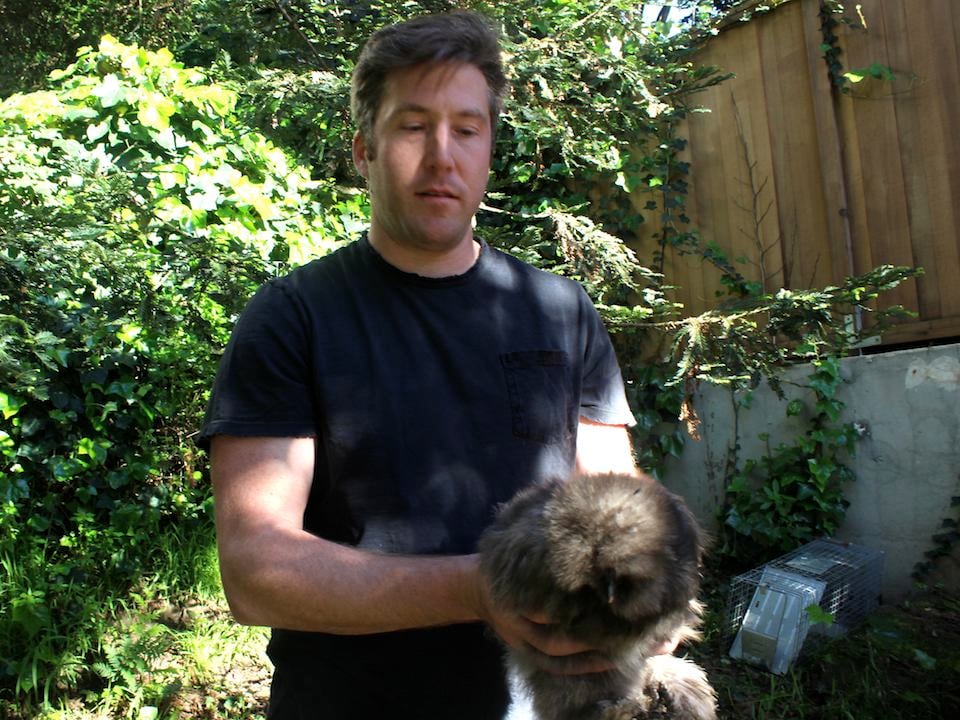 Urban farmer Jake Daneman.
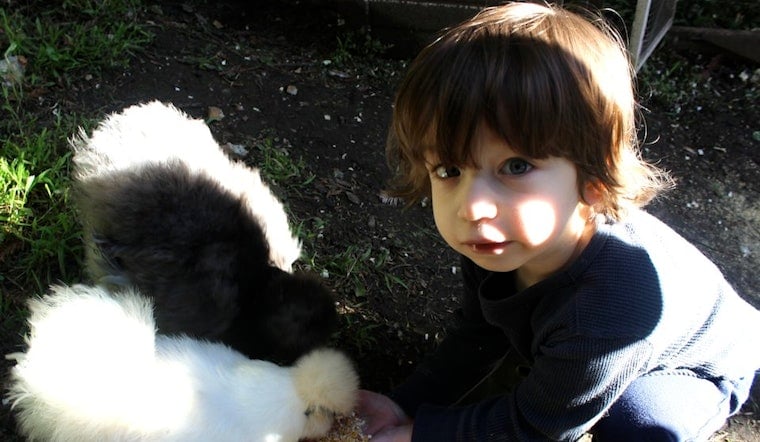
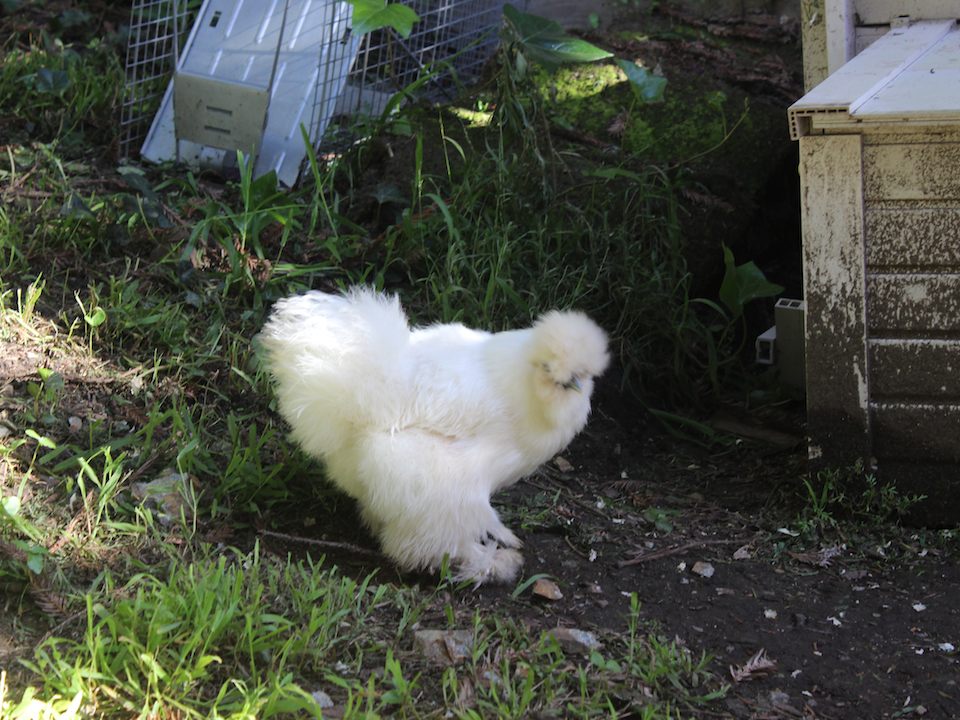
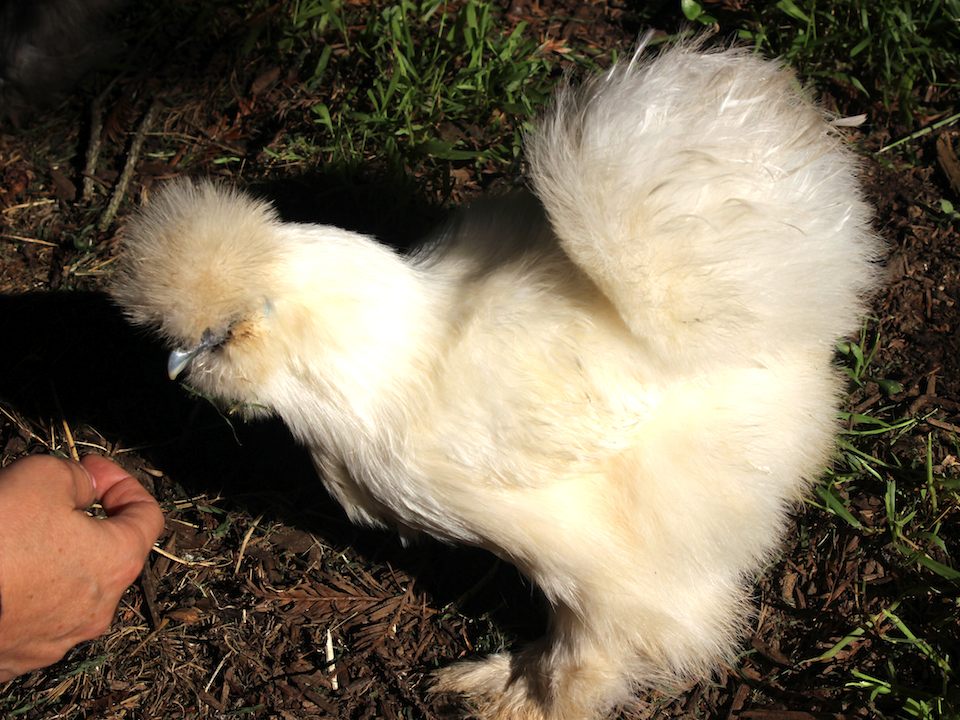
Originally bred in China, these chickens, known as Silkies, are covered in a fluffy halo of feathers that has a satiny, silky texture. With black skin and beaks and blue earlobes, the birds bear little resemblance to the familiar Rhode Island Red, or indeed, most any other chicken.
Named Bakery and Gobbles, these two are the queens of their yard, but they also like to spend time with their human family. "They're bred for companionship, not for production or for food," said Daneman. Most chickens have four toes, "but Silkies have five toes on each foot, so maybe a little bit of inbreeding," he speculated. "They're super mellow."
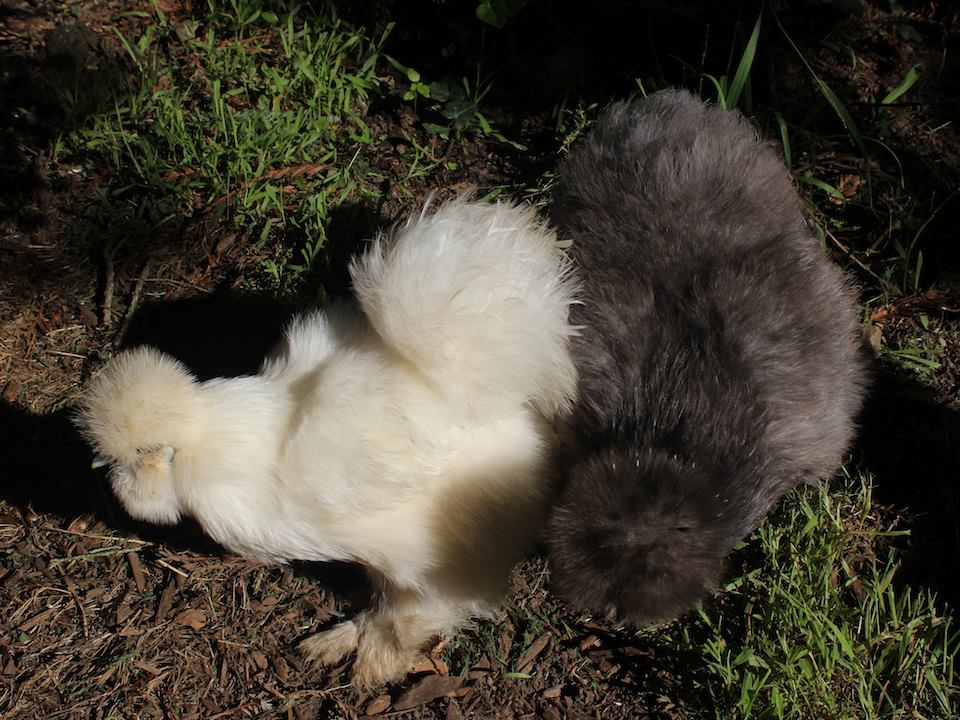
Bakery and Gobbles are between eight to twelve months old, said Daneman. The chickens, which are inseparable, even lay eggs together three times each week. Daneman and his family eat the eggs, but use the surplus to barter with neighbors. Recent trades have netted him "many" 24-ounce bottles of Corona, plus chocolate and matzoh ball soup.
When Daneman moved in, the sloped backyard was "covered in rubber, plastic and garbage." After shelling out for rolls of turf that failed to take root, "I grabbed plugs of crabgrass from Golden Gate Park, and it's finally started to spread," he said.
While we visited, the chickens wandered the yard, occasionally pecking at green shoots and crawling things. When Daneman handed his son Asher a handful of cracked corn, the birds bookended the boy immediately.
"Cracked corn is a treat when I come out here with the kid to get them close," said Daneman. In addition to foraging, the birds draw sustenance from "a water dish and egg-laying crumble you get in a sack from a feed store," he said.
"Any food scraps can go right in the coop, and it turns into eggs," he said, gesturing at a small heap of wilted salad greens. "You can't go wrong."
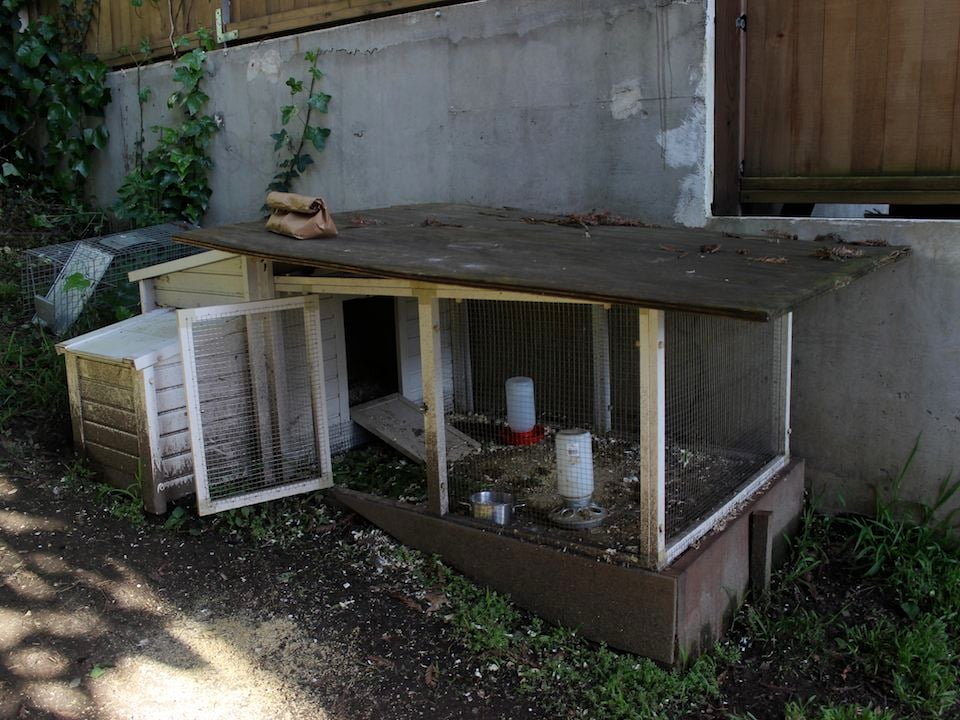
The coop Daneman built cost less than $200 and includes a covered area enclosed by chicken wire, as well as a hutch where Bakery and Gobbles lay eggs. Daneman learned "the hard way" that coops also require a layer of wire on the floor to keep out raccoons, skunks and rodents. "And make sure you have a coop that can handle water when it rains."
Generally, Bakery and Gobbles are low-maintenance, said Daneman. "About once a month, I get in there with a shop vac to clean the coop," he said. "You can't smell anything as long as you're feeding them clean food and don't keep rotten grains." To keep the ladies looking their best, he bathes them inside the house using the family's shampoo.
"I love them," said Daneman. "It really is better than cable."
The Silkies will soon have two new roommates; Daneman plans to acquire two Indian Runner ducks. Also from Asia, they're built like penguins, but instead of waddling, they run. In the garage, Daneman is putting the finishing touches on a starter box for the ducks, which can each lay up to 200 eggs/year.
Daneman, who grew up on a farm, encourages fellow city-dwellers to embrace animal husbandry. "If you get the right chicken, it's only upside," said Daneman. "Your grass isn't going to disappear, your garden's not going to go away; it's just some weeds here, and bugs there. There's zero downside, just fresh eggs."