


























































San Jose's tech landscape is set to grow further with the recent final approval of a five-story, 292,500 square-foot office building and a two-story, 12,000 square-foot amenities building at the Coleman Highline campus in North San Jose, as reported earlier by the Registry.
The Coleman Highline campus, overseen by Cupertino-based Hunter Storm, has proven successful thus far, with a lease agreement allowing streaming giant Roku to rent multiple buildings and relocate its headquarters and a rental by ByteDance, parent company of TikTok, per Silicon Valley.com News. This campus represents the continuous expansion of the tech industry in San Jose, with a variety of businesses occupying high-quality spaces in this ever-growing hub for innovation.
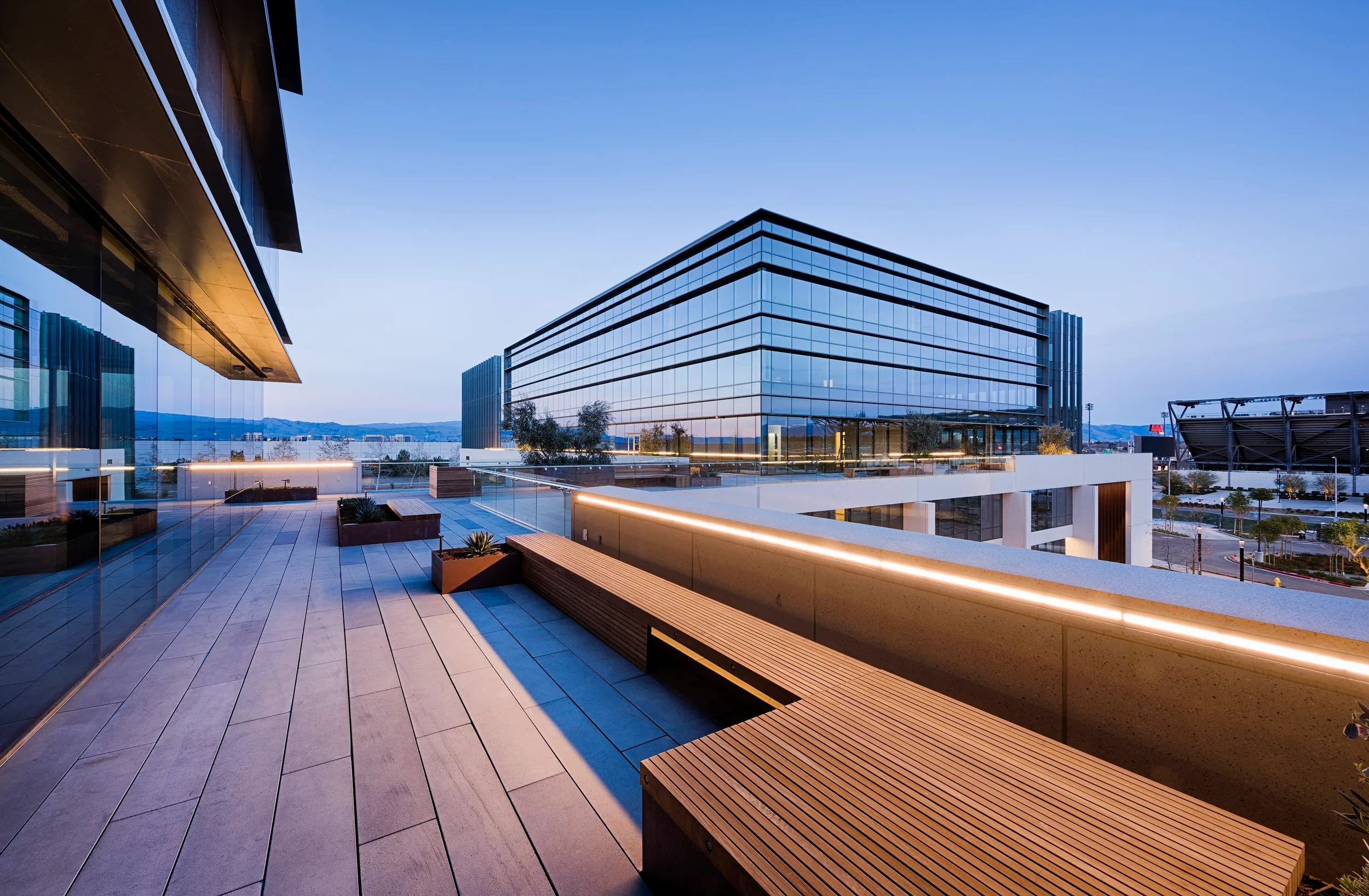 Source: Coleman Highline
However, the situation in San Francisco paints a different picture, as the city suffers from a significant downturn in property values, particularly for its prized commercial real estate; this contrast raises questions about the diverging paths of these two neighboring Bay Area cities.
The once-thriving commercial property market in San Francisco appears to be staggering under the weight of the post-pandemic era and the rise of remote work, as evidenced by the expected price drops of over 80% for the Union Bank Building at 350 California Street and the Wells Fargo-owned property at 550 California Street, as I previously reported here on Hoodline. The loss in property value appears worrisome, hinting at a bleak future for the city's downtown commercial market; but it's worth noting that San Francisco has managed to bounce back from countless setbacks in the past and may yet recover from this difficult period.
Despite this challenging economic climate for San Francisco's commercial spaces, there are hopeful developments within its tech industry: Industry expert Garry Tan, president of venture capital firm Y Combinator, expressed his belief in the city's resilience during past adversity and the potential for a rebound, as I mentioned in this Hoodline article.
To support San Francisco's path to recovery, Mayor London Breed has initiated various policies to address the city's homelessness and drug dealing problems, including plans to expedite the construction of 83,000 new homes and apartments and proposing new legislation that allows more accessible mental illness treatment in certain circumstances.
Meanwhile, in San Jose, the Coleman Highline campus' latest addition is a significant milestone for the development group Hunter Storm, serving as a testament to the project's ongoing success in attracting major tech industry players; with the finalization of this approval, San Jose's tech campus is poised to become an even more substantial hub for innovation and growth in the area.
The different trajectories of these Bay Area cities pose the question: What will the future of tech hubs look like, particularly amid the ongoing effects of the pandemic and the growing shift towards remote work? If San Francisco's commercial real estate market continues to struggle, the burden could very well fall upon the flourishing tech shoulders of San Jose, stirring further investment and infrastructure development in this burgeoning city.
The success of San Jose's Coleman Highline campus, as detailed in a San Jose Spotlight piece, serves as a beacon of hope for the tech industry in the Bay Area; nonetheless, it remains essential to monitor developments in San Francisco and other cities as they navigate the new realities brought about by the pandemic and the shift in work dynamics.
Only time will tell how these urban tech hubs will transform and adapt to the new normal, but for now, both San Jose and San Francisco face the many challenges and opportunities that lie ahead – one moving towards expansion and the other grappling with a downturn, illustrating the varied real estate market dynamics within the Bay Area.



-4.webp?w=160&h=400&fit=crop&crop=edges)
