

























































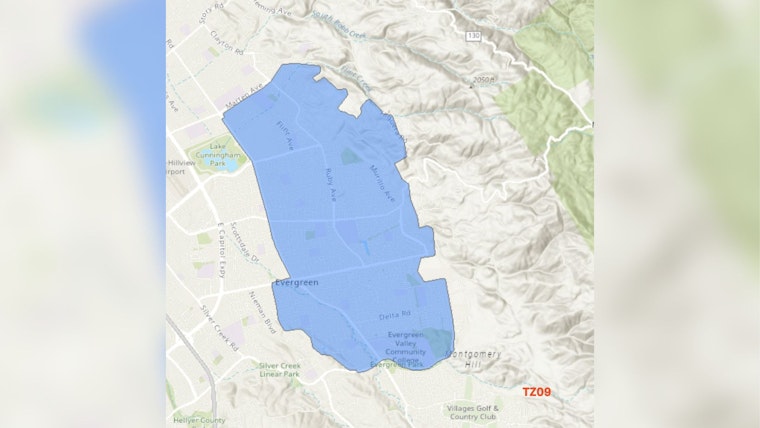
Santa Clara County officials have confirmed the presence of these disease-carrying insects in a limited area within San José and unincorporated Santa Clara County, sparking a targeted adult-mosquito-control treatment set for Tuesday, Sept. 5, in affected ZIP codes 95121, 95135 and 95148 according to Santa Clara County.
The County of Santa Clara Vector Control District primarily focuses on preventing mosquitoes from reaching the adult biting stage by targeting immature stages found in standing water. However, when a mosquito carrying West Nile virus (WNV) is detected, the District takes the added step of conducting adult-mosquito-control treatments. This step is crucial as any delay in the application of treatment would present an imminent threat to public health and safety, potentially exposing the public to vector-borne injuries or even death.
It is typical to see an increase in West Nile virus cases during the summer and early fall, as mosquitoes thrive during warmer temperatures. The District has a dedicated surveillance program in place to detect diseases transmitted by mosquitoes, such as West Nile virus, St. Louis encephalitis, and western equine encephalitis. The data collected is used to predict locations more likely to have disease-transmitting mosquitoes.
Truck-mounted treatments have been conducted by the District since 2003 to successfully reduce WNV-transmitting mosquito populations. For the upcoming treatment, Santa Clara County has provided advanced notice to residents in the affected ZIP codes via various means such as mailed postcards, AlertSCC, emails, Nextdoor, and social media platforms.
ALERT! West Nile virus infected mosquitoes have been detected in a small portion of the county. A mosquito control treatment will take place in part of the 95121, 95135, and 95148 zip-codes on Tue. 9/5, at 10PM & concluding a few hours later. More info at https://t.co/lGgJVVqBRI. pic.twitter.com/peTYUT19LZ
— County of Santa Clara Vector Control District (@SCCVCD) August 30, 2023
While mosquito treatments pose minimal risk to humans, pets, animals, and the environment when applied by a licensed vector-control professional, some residents may want to take extra precautions during the treatment. They can keep family members and pets inside during the four-hour treatment, with windows and doors shut. It's also worth noting that the insecticide applied will quickly break down when exposed to sunlight in the morning.
Since the arrival of West Nile virus in California in 2003, over 7,000 people across the state have contracted the disease, with nearly 400 cases proving fatal. In 2022 alone, there were 15 human WNV-related deaths, and 2015 was a record year for fatalities in the state with 55 deaths.
Most people infected with WNV do not display any symptoms. However, some individuals experience fever, headaches, and body aches, and in severe cases, significant neurological damage or death. The elderly and individuals with certain chronic medical conditions (including diabetes, high blood pressure, cancer, and kidney disease) are at the highest risk for complications from the virus.
With this alarming news, local residents can contribute to the efforts to prevent the spread of West Nile virus by proactively eliminating standing water on their properties, regularly clearing debris from rain gutters, ensuring window and door screens are in good condition, and reporting possible mosquito-breeding sources to the County of Santa Clara Vector Control District. Additionally, it is recommended that people limit outdoor activities during dusk and dawn when WNV-transmitting mosquitoes are most active, dress in long-sleeve shirts and long pants when outdoors, and use insect repellents containing DEET, IR3535, or oil of lemon eucalyptus.





