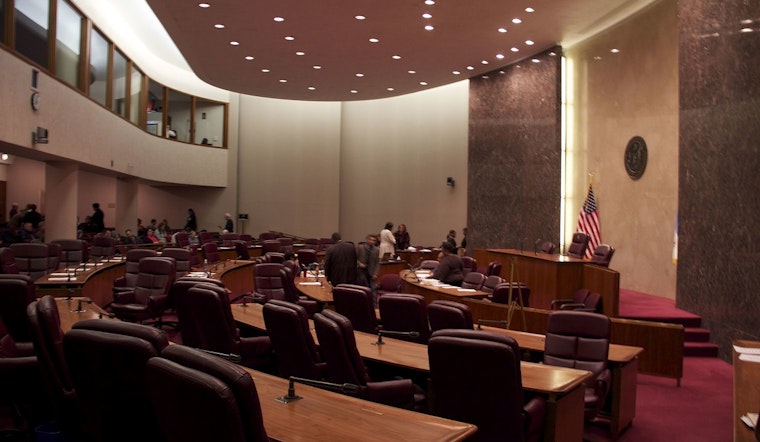
In what has been hailed as a significant step towards economic equality, the City Council's Workforce Committee has advanced legislation that would require tipped employees in Chicago to receive the same minimum wage as all other workers. As reported in the Chicago Tribune, the proposal has emerged as a result of a deal struck between Mayor Brandon Johnson's allies, worker advocacy groups, and the restaurant industry.
Under the proposed changes, the wage gap between tipped and minimum-wage workers would be phased out over the next five years, with the difference between both shrinking initially from 60% to 40% in July 2024 and further narrowing by 8% each subsequent year until parity is reached by July 1, 2028. The legislation presents a potential turning point for the countless tipped employees who have long faced unstable incomes and economic challenges.
As a Chicago Sun-Times article highlights, Ald. Jessie Fuentes, one of the measure's lead sponsors, expressed gratitude to Mayor Johnson for keeping his election promise. "We cannot say that we want Black and Brown women to thrive, we cannot say that we want communities on the South and West Sides to be economically viable if we're not willing to pay our people the minimum wage," Fuentes said.
While the legislation marks a victory for the One Fair Wage campaign, many remain skeptical about its implications, especially considering the devastating impact the pandemic had on the restaurant industry. Some workers fear that increasing the sub-minimum wage might lead to a reduction in tips, creating a challenging environment for those who already struggle to make ends meet. Karylin Veres, a server from a restaurant family, voiced her concerns at the committee meeting, saying, "I fear a mass exodus of service workers, including myself, who no longer want to subject themselves to the difficulty of this work for less pay."
Arguments from detractors such as Veres were met with data from cities that have already abolished sub-minimum wages. According to Chicago Sun-Times, Saru Jayaraman, director of the UC Berkeley Food Labor Research Center, suggested that in the seven states that eliminated the sub-minimum wage system, workers' hourly pay actually went up. Additionally, Ald. Carlos Ramirez-Rosa noted that these changes in various American cities have led to increasing employment opportunities while seeing restaurants thrive.
Despite Ramirez-Rosa's assurances, those residing in wards bordering the suburbs worry about potentially higher menu prices and argue that they already face significant challenges in enticing businesses to the Chicago side. Another Chicago Sun-Times article quotes Ald. Derrick Curtis as saying, "It's so hard to get businesses to come on the Chicago side. It's a struggle being on that border and seeing a business come up across the street."
Though opponents believe this might become a "job killer," resulting in increased service costs and job losses, supporters argue that the long-term benefits far outweigh the short-term costs. The legislation aims to make incomes more predictable for tipped workers, with potential implications of reduced employee turnover rates, ultimately fostering a healthier work environment.