

























































On National Opioid Awareness Day, the Los Angeles County Department of Public Health and numerous partners have pledged their commitment to implementing a multi-faceted prevention strategy in an effort to battle the alarming opioid overdose crisis in Los Angeles County. With record-high overdose numbers and seven to eight people losing their lives every day, it's crucial that swift action is taken according to an announcement by Public Health.
A staggering, approximately half of these daily fatalities are caused by fentanyl, a dangerously potent synthetic opioid. The United States Drug Enforcement Administration has revealed that now six out of ten street-bought drugs contain illicit fentanyl. This unknown factor makes detecting the presence of fentanyl in street drugs nearly impossible, as the substance can't be seen, smelled, or tasted.
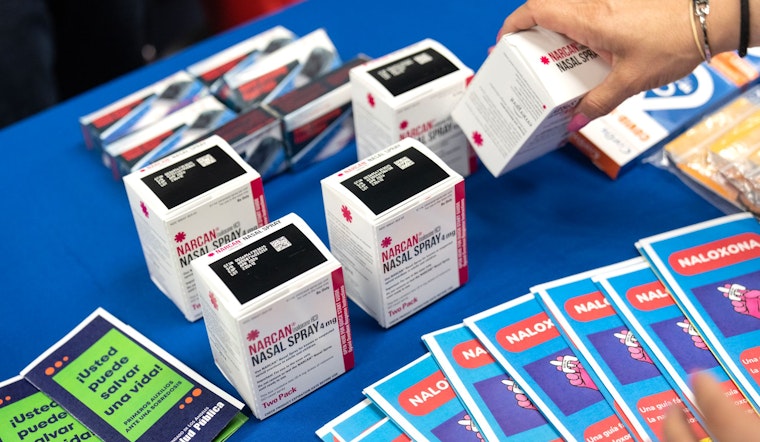
In an attempt to combat the overdose crisis, Public Health has outlined several intervention programs and services with the aim of preventing opioid use, reducing death rates, and conveniently providing access to treatment options. Some of these resources include the distribution of naloxone—an easy to administer opioid overdose reversal nasal spray, expansion of harm reduction programs, and increasing targeted awareness campaigns designed to highlight the growing community risk posed by illicit fentanyl alongside available tools to help those in need.
Officials from Public Health and community partners gathered at the Martin Luther King Jr. Behavioral Health Center to raise awareness and highlight their dedication to fighting the overdose crisis. Los Angeles County Supervisor Holly J. Mitchell was quoted in the Public Health announcement, emphasizing the importance of strengthening preventative resources and the role of community partnerships in addressing the opioid epidemic.
Barbara Ferrer, PhD, MPH, MEd, Director of the LA County Department of Public Health, referred to the fentanyl crisis as "a tragedy of historic proportions," affecting communities and causing the devastating loss of thousands of friends, family members, and loved ones. She added that everyone plays a role on the "frontline of the fentanyl crisis" and encouraged community members to understand the gravity of the situation, while recognizing that life-saving tools like naloxone are available.
Los Angeles County Sheriff Robert Luna further underscored the impact of the fentanyl crisis on all communities, neighborhoods, and demographics. He emphasized the importance of collaborative efforts in opioid and fentanyl awareness as a shared responsibility towards saving lives.
Concerning the impact of the crisis on students, Dr. Debra Duardo, Los Angeles County Superintendent of Schools, expressed the importance of taking action and implementing preventive and interventionist measures. She recognized and appreciated the efforts made by community partners in addressing the opioid epidemic more comprehensively, enabling the safeguarding of vulnerable youth.
William D. Bodner, DEA Special Agent in Charge of the Los Angeles Field Division, explained that the DEA is working tirelessly on a multi-level approach to tackle the drug overdose and poisoning crisis, driven by criminal drug networks. The DEA's commitment to a comprehensive approach encompasses targeting and prosecuting offenders, community outreach, and expansion of medically assisted treatment options, emphasizing that education and awareness are crucial components to ending the drug crisis.
Community member Alma Sanchez shared her heartbreaking personal experience of losing her 19-year-old son Deenilson to a fentanyl overdose. Sanchez passionately advocates for awareness, change, and education, hoping to spare others from the immense pain and grief that accompany the loss of a child or loved one. Reflecting on the challenge of overcoming stigma and starting conversations about substance use disorders, she urged the community to support one another and build a better future for all families.




