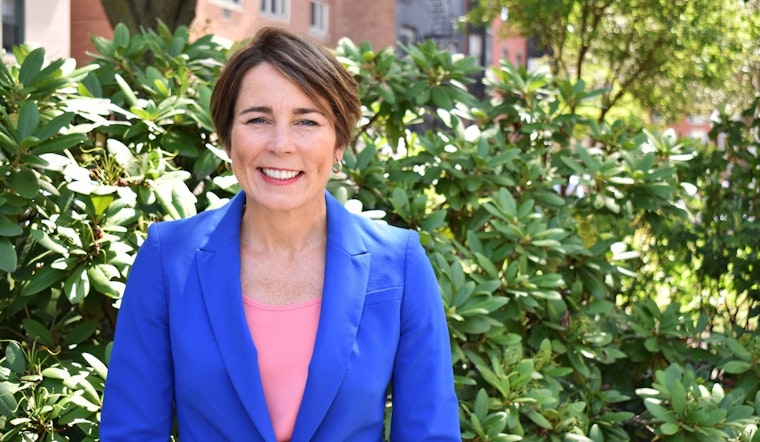
In a significant push for sustainability, the Healey-Driscoll Administration recently announced the allocation of nearly $5.2 million in grant funding to support recycling, composting, and waste reduction efforts by 283 municipalities and regional solid waste districts across Massachusetts. The grant will come through the Sustainable Materials Recovery Program (SMRP) and is made available by the Massachusetts Department of Environmental Protection (MassDEP). The move has garnered attention as it is expected to bring about significant changes to waste management in numerous local communities, as reported at Mass.gov.
As Massachusetts presses on to meet its ambitious goal of 90% waste reduction by 2050, the announced funding aims to help strengthen recycling, composting, and waste reduction efforts across the state. Governor Maura Healey highlighted the importance of supporting local communities in their endeavors to protect the environment. Providing financial assistance helps local economies grow while simultaneously promoting the sustainability initiatives taking place at the community level and aids in reducing the state's overall dependence on utilization of landfill space and carbon-emitting incinerators.
The SMRP grants have been allocated across several distinct categories, including start-up incentives for Pay-As-You-Throw programs, containers for the collection of mattresses, mercury-bearing item collection, regional small-scale initiatives, and the Recycling Dividends Program. The Recycling Dividends Program itself is slated to provide $3.65 million in funding, with 15 municipalities receiving payments of over $50,000 each, including prominent cities such as Boston, Springfield, and Worcester. By requiring communities to re-invest in their recycling programs, this initiative specifically seeks to maximize materials reuse, recycling, and waste reduction, as noted by MassDEP Commissioner Bonnie Heiple.
Pay-As-You-Throw, where residents directly pay for the waste they generate, is another key aspect of the grant allocation. As a proven waste reduction strategy, it remains a high priority for MassDEP, which awarded over $1 million in funds to five municipalities, including Arlington and Westborough.
Further, funds have been distributed for Universal Waste Sheds, with eight communities receiving $5,000 each for drop-off facilities to collect mercury-bearing items. Eleven municipalities received $10,000 each for facilitating residential mattress recycling via mattress collection containers. The City of Medford was awarded $105,000 for a new town-wide program to introduce wheeled carts for curbside collection of food waste, while the towns of Nahant and Norwood received smaller grants for a pilot program.
The South Shore Recycling Cooperative, representing 12 South Shore towns, received a substantial $250,000 grant to establish a permanent household hazardous waste facility based in Hanover.
Key political figures in Massachusetts have voiced their support for these grants, acknowledging their necessity for achieving the state's long-term climate goals. State Senator Becca Rausch (D-Needham) said in the mass.gov announcement that the funding provided through SMRP grants helps usher in "green infrastructure upgrades" that benefit small businesses and municipalities alike.
In line with these priorities, State Representative Daniel Cahill (D-Lynn) emphasized the importance of mitigating the amount of waste disposed in landfills and incinerators, praising the initiative's goal to reduce greenhouse gas emissions by capturing embodied energy in waste products to convert into new sustainable products.