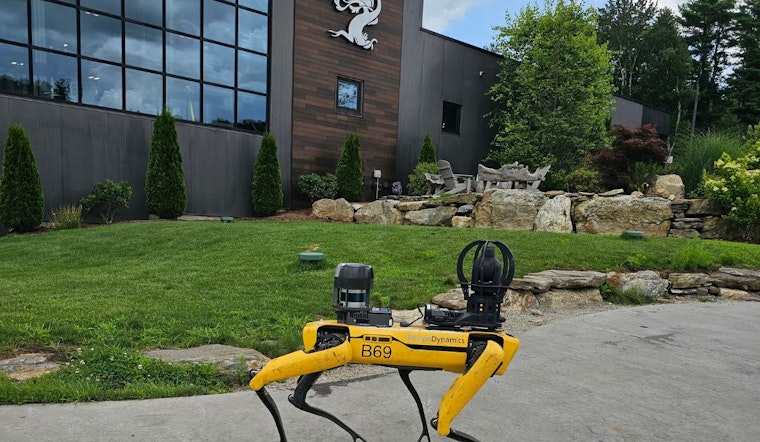
In a preemptive move to counter the possible threat of misuse and the potential implications of weaponized robots, Massachusetts may become the first state in the United States to regulate weapons attached to robots. According to The Boston Globe, state representatives Lindsay Sabadosa and Senator Michael Moore have proposed a legislative bill that would ban the manufacture, sale, and operation of weaponized robots and drones.
While there have been calls for regulation on the weaponization of robots and drones, such proposals have not gained traction. For instance, Wired reported on New York City council member Ben Kallos's 2021 proposal of a law that would ban police usage of weaponized robots. The proposal, however, focused primarily on law enforcement agencies, not the general public.
Conversely, the Massachusetts bill is broader in scope, addressing not only police usage but also civilian misuse of weaponized robots and drones. In support of this legislation, the bill received backing from robot developers, such as Boston Dynamics in Waltham, and trade groups like MassRobotics.
Though companies like Boston Dynamics do not sell weaponized robots, there have been concerns regarding the potential misuse of these machines. According to Brendan Schulman, vice president of policy and government relations at Boston Dynamics, there are instances of people buying robots, attaching weapons without the company's approval, and then using them for malicious purposes. This unauthorized weaponization not only raises ethical concerns but also threatens the reputation of robotics manufacturers.
Despite its wide-ranging provisions, the Massachusetts bill does not neglect the importance of law enforcement. It allows exceptions for the US military, defense contractors, law enforcement bomb squads, and private companies developing anti-weaponization technology. These entities can apply for waivers, case by case, from the attorney general. Violations of these rules would result in fines ranging between $5,000 and $25,000.
Additionally, the bill has certain provisions regulating law enforcement agencies. Police would be required to obtain a warrant before using a robot to enter a private residence, except in exigent circumstances. Furthermore, law enforcement agencies would need to disclose information about their use of advanced robotics as per public records requests.
The Wired article cited concerns of increased militarization of police and the possible misuse of weapons by law enforcement officers as AI systems are often plagued by algorithmic bias problems. Similarly, experts like Nir Eisikovits, director of UMass Boston's Center for Applied Ethics, underline the credible concerns about bias in law enforcement.
Northeastern University professor Denise Garcia, a member of the school's Institute for Experiential Robotics, believes that weaponized and automated robots should be prohibited from even battlefields. Garcia, who also serves as vice-chair of the International Committee for Robot Arms Control, notes that the United States already possesses the highest homicide rates in the developed world. She fears that weaponizing robots and drones could further exacerbate this problem.
The Massachusetts bill, set to be assigned to relevant legislative committees for hearings, aims to pioneer the establishment of proper regulations for weaponized robots within the US.