

























































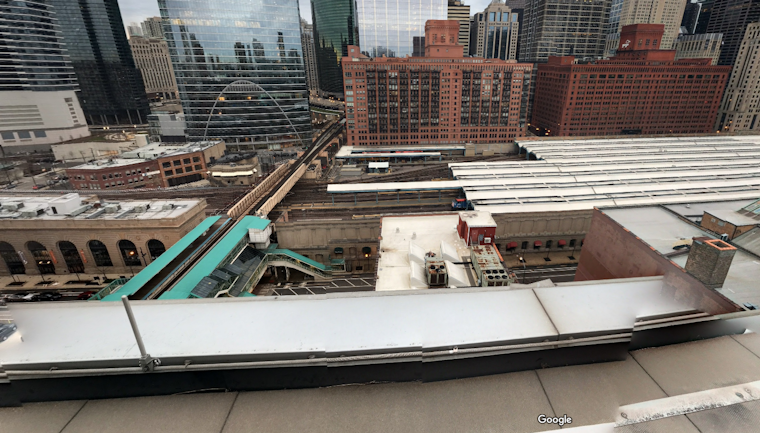
Today, the Chicago Transit Authority (CTA) announced a considerable plan to improve its service, address workforce shortages, and prepare for the city's public transportation future. The plans feature a $2 billion budget for 2024, intended to attract riders and deal with staffing shortages, while keeping fares unchanged. However, the CTA will need to overcome challenges such as financial deficits, service expansion, and workforce constraints, as reported by the Crain's Chicago Business.
The CTA intends to restore services next year that have been previously trimmed. However, the contingencies of hiring practices create uncertainty for the agency's capacity to promptly enhance its transit services. Though some progress on bus operator employment has taken place, more efforts are needed to completely tackle the staffing shortfalls and reach the targeted service growth. The CTA has allotted a nearly $2 billion budget, a 9.2% increase from 2023's budget, for these conundrums.
Funding for enhancements in service, partly for the recruitment and retention of operators, security measures, and services for people living on CTA grounds, are included in the budget. Additionally, funding to upgrade the Ventra fare system and integrate a customer chatbot service, has been planned. Moreover, the agency aims to analyze its bus network and coordinate with the city on a scheme to rank bus routes on certain roads, as explained by the Chicago Tribune.
Although ridership numbers are considerably below the pre-pandemic levels, a gradual recovery is noticeable. Federal pandemic aid has played a pivotal role in compensating for the lost earnings due to lower ridership. However, this financial aid is projected to end in 2025, resulting in a $50.4 million deficit that year and nearly a $577 million shortfall in 2026. As reported by Crain's Chicago Business, the CTA, along with other regional transit agencies, faces the formidable challenge of bridging this financial gap post federal aid.
The Regional Transportation Authority (RTA) has been exploring multiple ways to deal with these budget gaps. The agency predicts a combined deficit of $730 million for the Chicago-area's three transport agencies after the exhaustion of federal funds. RTA has been proposing ideas to address the future of public transit, including service recommendations and solutions for the funding gap, and the potential amalgamation of three transport agencies into one, according to the Chicago Tribune.
The extension of the Red Line south to 130th Street is among the significant capital projects planned by the CTA up to 2028. However, the $2 billion granted by the Biden administration for the project does not cover the CTA's full request, leaving a $400 million budget gap to be filled. As Crain's Chicago Business noted, the CTA will need to pursue additional funding via federal transit grants and state funding.




