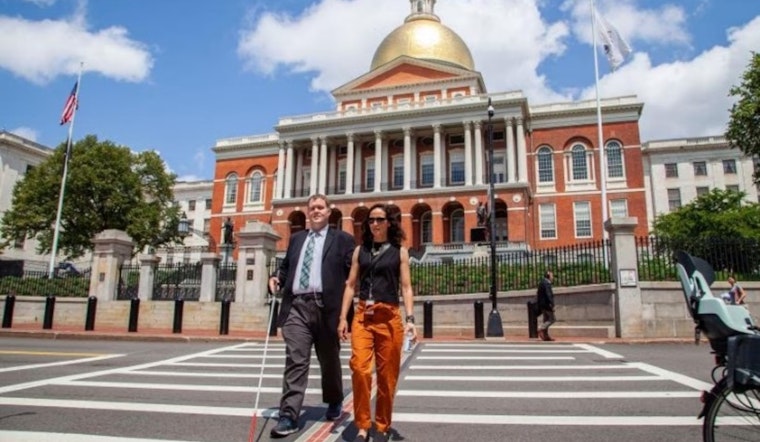
Earlier today, Massachusetts Governor Maura Healey officially declared October 15 as White Cane Awareness Day. The day validates roughly 30,000 visually impaired residents, recognizing their independence and mobility. The function also serves an appeal for societal commitment to preserving the safe transit of these individuals.
Raising awareness about White Cane Law in Massachusetts is the focus on an array of outreach initiatives led by The Massachusetts Commission for the Blind (MCB). The legislation necessitates drivers must stop for visually impaired pedestrians at street crossings, with non-compliance leading to fines up to $500 per violation. Governor Healey emphasized the importance of wide-spread education on the White Cane Law, advocating "We want everyone in Massachusetts to safely and independently navigate their environment, especially those who are blind and visually impaired."
The MCB Orientation and Mobility Director, Allyson Bull, stresses the importance of maintaining momentum beyond White Cane Awareness Day. She implores, "We must continue these conversations and government action to ensure consistently accessible streets."
Successes in other states pave the path for further progress in Massachusetts. As an example, in 2022, California's Senate Bill 986 required public transportation agencies to incorporate the needs of visually impaired passengers into the design of their facilities and stops.
Beyond awareness campaigns, MCB’s Certified Orientation and Mobility Specialists (COMS) offer hands-on contributions. They work directly with blind and visually impaired individuals, identifying their specific needs regarding mobility devices and personalizing travel training programs accordingly.
These measures represent an all-encompassing approach to addressing pedestrian safety, a strategy other regions can draw from and adapt. Creating truly inclusive environs for all necessitates continuous improvement, collaboration, and education.
The Annual White Cane Awareness Day stimulates discourse around safety, inclusiveness, and accessibility for visually impaired individuals. It is, however, our obligation as a community, to extend these efforts beyond this day. We must recognize and respect the diverse needs of every community member and continually strive to make our societies more inclusive.