

























































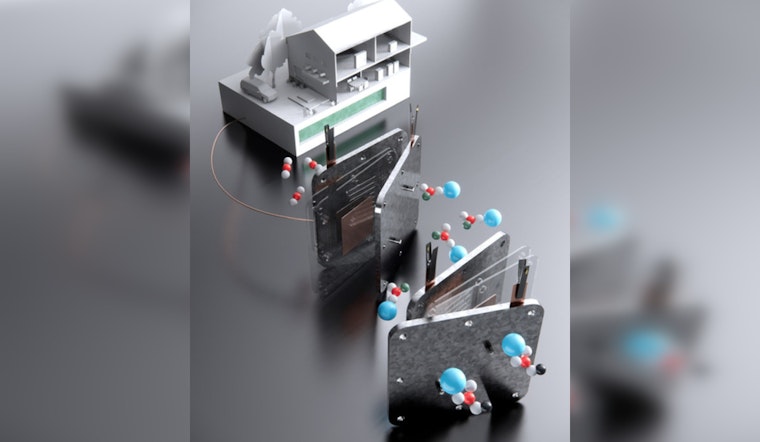
Researchers from MIT and Harvard University have developed a procedure for converting carbon dioxide into formate, a stable fuel that could replace fossil fuels in certain applications. As reported in MIT News, the discovery not only transforms CO2 into solid or liquid to power fuel cells, but also could potentially create a renewable, formate-based fuel economy suited for various scales of energy storage systems.
Previous efforts to convert carbon dioxide into fuel often grappled with low carbon efficiency or the production of difficult-to-manage, toxic or flammable fuels. However, the team led by MIT Professor Ju Li successfully converted carbon dioxide into formate with over 90% carbon efficiency. In addition, the formate created by this process is non-toxic, non-flammable, and remains stable for years in everyday steel tanks.
The traditional method for converting carbon dioxide into fuel involves two steps. Initially, CO2 is chemically captured and solidified, for example into calcium carbonate. Later on, material is heated to release the carbon dioxide and convert it into a fuel feedstock, such as carbon monoxide. This old way provides an efficiency less than 20%, rendering it non-viable for sustained use. However, the new method created by such research team takes out the inefficient second process by turning CO2 into liquid metal bicarbonate and then electrochemically into liquid potassium or sodium formate in an electrolyzer, powered by low-carbon electricity sources, such as nuclear, wind, or solar power.
As quoted in MIT News, Professor Li explains their new conversion process successfully overcomes enduring shortcomings related to older conversion practices. They optimized their technique to produce an incredibly efficient and pragmatic solution. Here, CO2 capture and conversion involve a base solution-based capture which condenses CO2 into a liquid metal-bicarbonate solution. This solution is next electrochemically converted into formate crystals with a carbon efficiency exceeding 96% using a cation-exchange membrane electrolyzer.
In addition to benefiting from a high efficiency process, the team also developed and refined a fuel cell designed to use formate fuel for electricity production. Formate fuel can dissolve in water and be directed into the fuel cell when required. Although the solid fuel weighs more than hydrogen, when factoring in the high-pressure gas storage needed for hydrogen, their electrical outputs are almost equal. Besides, the formate fuel demonstrates potential utility in home and industrial settings, not to mention for grid-scale storage systems.
The groundbreaking research is published in Cell Reports Physical Science, garnering significant attention from field experts. Ted Sargent, a professor at Northwestern University, who wasn't involved in the study, commended the work, explaining, "The formate economy is an intriguing concept because metal formate salts are very benign and stable, and a compelling energy carrier." He further recognized the team's achievement improving the conversion process's efficiency.
Moving forward, the groundbreaking research could instigate a transition toward a formate-based fuel economy for a sustainable and environmentally friendly energy solution. This achievement marks a significant advancement in renewable energy and represents the collaborative effort by MIT and Harvard University researchers for a more sustainable future.





