

























































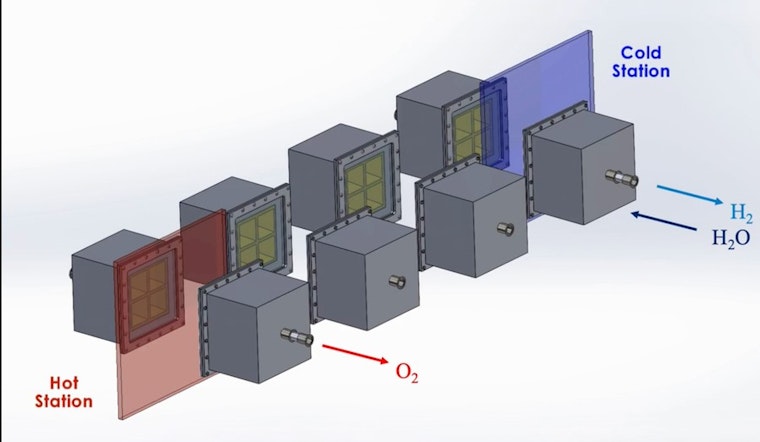
A landmark advancement in green hydrogen fuel production has been made by a team at the Massachusetts Institute of Technology (MIT). Their new design for solar thermochemical hydrogen (STCH) production, as detailed in MIT News, promises to increase efficiency by harnessing up to 40% of the sun's heat. This leap forward could transform the transportation industry by reducing costs and making hydrogen fuel production more efficient.
The majority of hydrogen is currently produced using fossil fuels, especially natural gas, making it a carbon-reliant energy source. Unlike these existing processes, the STCH system from MIT is entirely solar-powered, eliminating production emissions. However, prior STCH designs were less efficient, converting only about 7 percent of the sunlight into hydrogen, leading to high production costs.
Address these problems is the aim of the MIT research team's innovative design. Together with the Department of Energy, their goal, according to the MIT News article, is to produce green hydrogen at $1 per kilogram by 2030. As outlined in the Solar Energy Journal, the STCH system is made up of a series of box-shaped reactors that loop around a concentrated solar power (CSP) tower, engaging, in a two-step thermochemical reaction process to produce hydrogen.
The unique MIT design includes various energy-saving methods that confront the issues of previous STCH designs. As detailed in the MIT News article, one method reuses generated heat within the system, leading to higher efficiency by allowing reactors to exchange thermal radiation. A second series of reactors are also incorporated which run counter to the first, extracting oxygen from the original reactors while avoiding any energy-intensive mechanical pumps.
According to the simulations run by the researchers, this system could elevate STCH efficiency to 40 percent from the initial 7 percent. As quoted by MIT, Ahmed Ghoniem, the study's lead author, asserts this entirely sun-driven system could offer a cleaner hydrogen production process.
As reported in the MIT News article, the development and roll-out of STCH systems will play a significant role in building a cleaner, sustainable future.





