

























































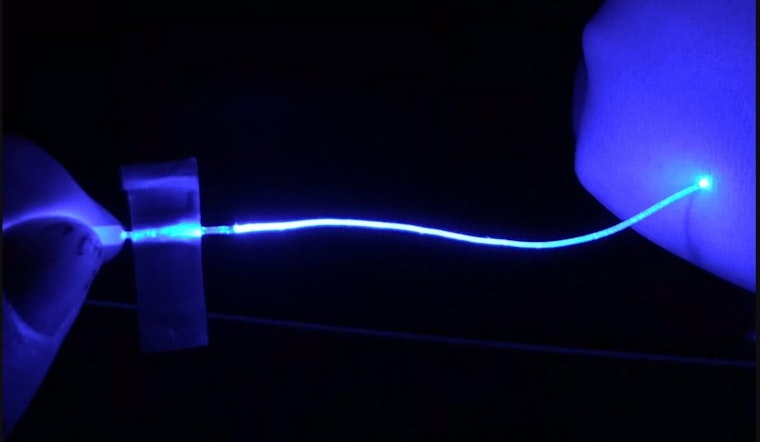
A team at MIT has created soft optical fibers for precise light therapy administration to major nerves, potentially revolutionizing peripheral nerve disorder research and treatments according to Massachusetts Institute of Technology. The implantable, stretchy fibers move with the body, providing accuracy and adaptability.
Peripheral nerve pain impacts millions globally, with the U.S. recording over 20 million cases. When peripheral nerves, those outside the brain and spinal cord, sustain damage, they cause pain, numbness, and tingling in affected limbs. Current nerve disorder study devices limit movement, reducing accurate analysis potential due to their rigid nature.
Primarily, the MIT team envisages their soft optical fibers as tools for studying peripheral nerve disorders in animal models. These fibers, flexible and stretchable, enable effective light therapy application while permitting natural body movements. Siyuan Rao, an assistant professor of biomedical engineering at the University of Massachusetts at Amherst, who was to challenged to understand these fibers would yield "more specific data" than traditional devices.
The research breakthrough hinges on optogenetics, a technique modifying nerves genetically to respond to light. Previously, optogenetics aided elucidation of several brain disorder mechanisms but was restricted mostly to the brain due to device rigidity. Their new application to the peripheral nervous system could assist in establishing peripheral nerve condition causes and creating innovative treatments.
In accordance with a Nature Methods-published study, the MIT team used hydrogel, a biocompatible combo of water and polymers, to create soft optic fibers. They then developed a soft, stretchy, transparent fiber facilitating targeted light delivery by closely controlling the water and polymer ratio. The fibers, featuring a core and an outer shell with a particular mix of nanoscale polymer crystals arranged uniquely, held the light within during use thanks to different refractive indexes between the layers.
Researchers then tested the hydrogel fiber on mice with nerves genetically modified to be either yellow or blue light sensitive. Even with the fibers implanted, the mice freely roamed and ran on a wheel and over two months, the fiber retained robustness and light transmission efficiency to trigger muscle contractions.
The fibers' pain reduction capabilities were further tested utilizing standard laboratory procedures. They stimulated the mice with fiber-emitted yellow light, discovering that these mice exhibited significantly less pain sensitivity than their unstimulated counterparts. This confirmed the fibers' effective sciatic pain blocking in the treated mice.
According to lead researcher Xinyue Liu, PhD '22, this technology "may identify novel mechanistic treatments for chronic pain and other conditions such as nerve degeneration or injury."
Researchers emphasize that these innovative soft optical fibers are a promising tool for better understanding chronic pain and peripheral nerve disorder root causes. As this technology matures, it could potentially provide relief and improve the lives of the millions impacted by these conditions.





