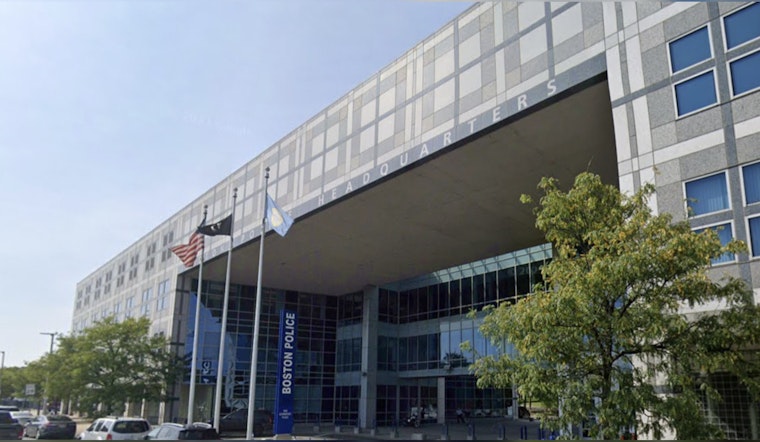
The Boston City Council recently passed an ordinance requiring the Boston Police Department to compile an annual report on illegal firearms trafficking. This step aims to enhance the city's understanding of the issue and guide law enforcement and legislators in formulating relevant policies. Councilor Brian Worrell and Council President Ed Flynn, who sponsored the ordinance, stressed the importance of an evidence-based approach to tackle this entrenched problem as reported by Boston.com.
The gun violence has been declared a public health emergency by the City Council to shocking. There have been a total of more than 1,900 shootings since the beginning of 2015, and 129 incidents this year alone according to Boston.com. A significant portion of these alarming statistics is due to the illegal trafficking of weapons. In 2022 alone, Boston police recovered over 900 illegal guns. Among firearms implicated in crime scenes in 2021, only 10% were purchased within the state, with the rest being imported from 18 other states, as mentioned in the ordinance.
The ordinance plans to utilize a variety of law enforcement data sources, including information from the Boston Police Department, state police, Suffolk County sheriff's office, and Suffolk County district attorney's office per a WBUR article. Tracking guns in the United States presents multiple challenges, but a thorough analysis of firearm-related data may offer valuable insights. Detailed information on each recovered firearm, including any links to crimes, origin, registration, and potential 3D-printed construction, will be incorporated into the annual report.
Although federal laws may limit the dissemination of certain data, the ordinance, as amended by the City Council, takes these limitations into account. The finalized report will be submitted to the mayor, the City Council, and the Boston Public Health Commission. The collated data will enable policymakers to allocate resources strategically to tackle gun violence. Councilor Worrell, who represents a district with elevated gun violence levels, admitted that past approaches failed to yield the expected results and advocated for a fresher, data-driven perspective as mentioned in a Boston.com article.
Law enforcement agencies are also grappling with the rise of 'ghost guns' - untraceable weapons often assembled at home using 3D printers. Such firearms pose a unique set of tracking challenges, as highlighted in an earlier Boston.com article. Therefore, addressing this emerging menace will be crucial to the annual report in the ongoing fight against the illegal arms trade.