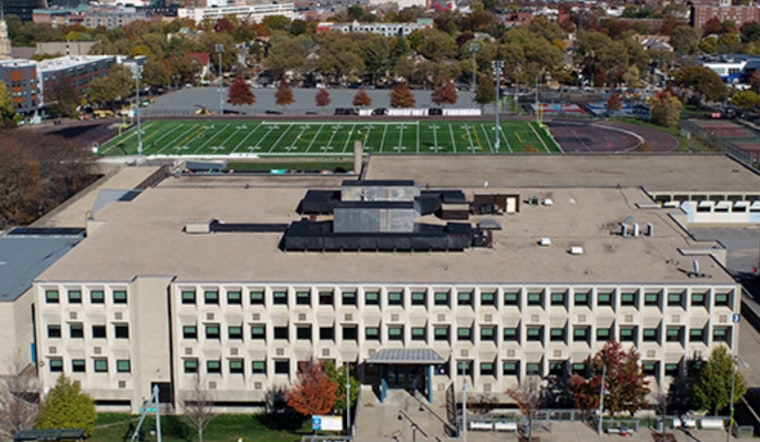
In a resounding show of concern for community sentiment, the Boston City Council voted Wednedsay to overwhelmingly oppose the relocation of the John D. O'Bryant School of Math and Science from its current Roxbury campus to a far-off site in West Roxbury. The resolution, put forward by Councilors Julia Mejia, Tania Fernandes Anderson, and Erin Murphy. It follows a five-hour hearing laden with impassioned testimonies from educators, students, and parents who are directly tied to O'Bryant School's future.
The Council's action, as reported by the Boston Herald, came with a demand for Boston Public Schools (BPS) to forthwith release a comprehensive 10-year district-wide facility plan. Critics of the proposed move fear the impact it may have on the diversity and accessibility that have long been hallmarks of the O'Bryant School. The resolution struck a chord with a clear majority, securing 10 votes in favor, while Councilors Ricardo Arroyo and Sharon Durkan voted against.
Despite assurances of state-of-the-art facilities and increased enrollment capacity, opposition voices, as The Boston Globe noted. The proposed new location poses to significantly extend commute times for students, particularly those travelling from as far as East Boston, raising questions about equitable access to education. To mitigate these concerns, BPS has suggested shuttle buses from transit hubs and is in talks regarding additional public transport options.
The heart of the controversy, however, lies not just in the logistical hurdles but in the symbolic disruption of a cultural thread. The O'Bryant School, located within Boston's Black Cultural Center, reflects a vibrant tapestry of racial and linguistic diversity. Opponents of the move, including educators and alumni, according to testimonies at the City Council hearing, fear that transplanting the institution to a predominantly white neighborhood could irreparably wash away the rich cultural hues that define it.
In the midst of uncertainty, Councilor Ed Flynn stood by his conviction, telling the Boston Herald, "If you want a state of the art O’Bryant school in the heart of the African American community, you have to fight for it." Meanwhile, Councilor Mejia echoed the sentiment of many, remarking to the Boston Globe, “This administration continues to fail to meet the moment when it comes to community engagement and creating opportunities for people to feel heard.” The battle over the O'Bryant School's fate seems to have evolved for broader discussions about schooling, community, and the spaces that define the geography of our shared civic life.