

























































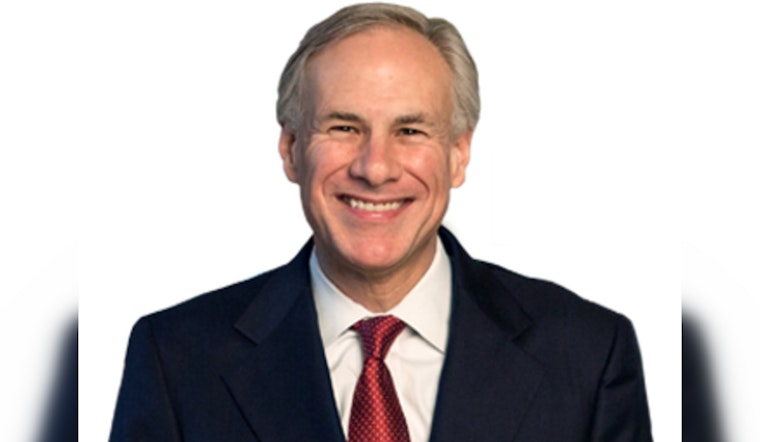
Texas Governor Greg Abbott is gearing up to sign two border security bills on Monday in Brownsville, marking a significant step in the state's crackdown on illegal immigration. According to KENS 5, one bill earmarks a hefty $1.5 billion for the construction of new barriers along the Texas-Mexico border, signaling a hardline stance by the state against unauthorized crossings.
The other legislation, known as Senate Bill 4, aims to make illegally crossing the border a state offense, clamping down on migrants with the threat of up to six months in jail for those caught. This new legislation complements the already strict federal laws, yet it has sparked concerns about potential racial profiling and has doubters questioning its alignment, or lack thereof, with federal statutes. The signing ceremony is scheduled for 4 p.m., as per reports by KENS 5.
Senate Bill 4 mirrors federal immigration laws by marking illegal entry and re-entry as a misdemeanor and a felony, respectively. It allows law enforcement to arrest anyone suspected of an illegal border crossing and charge them with an offense ranging from a Class A misdemeanor to a second-degree felony, as reported by USA Today. Officials, such as Texas Lt. Gov. Dan Patrick, have lauded the bill for strengthening border security, while others, like David Spiller, insist it is not a veneer for racial profiling.
However, the bill's legal future remains uncertain, with predictions of courtroom battles looming. Critics claim that immigration enforcement, historically the purview of the federal government, might be overstepped by SB 4. The legislation "doesn't require the governor's signature, although Abbott has said he'll sign it, possibly as early as today," according to USA Today. The anticipated legal challenges could place the bill alongside others like Arizona's S.B. 1070, which was struck down by the Supreme Court for overstepping federal purview.
On the national stage, the ramifications of S.B. 4's signing by Gov. Abbott extend far beyond Texas borders, amidst a year where immigration continues to be a pivotal political issue. And with these bills set to become law in March, it's evident that the Texan resolve is to firmly secure their stretch of the border, steering the conversation on state-versus-federal jurisdiction of immigration law onto a new, contested path.





