

























































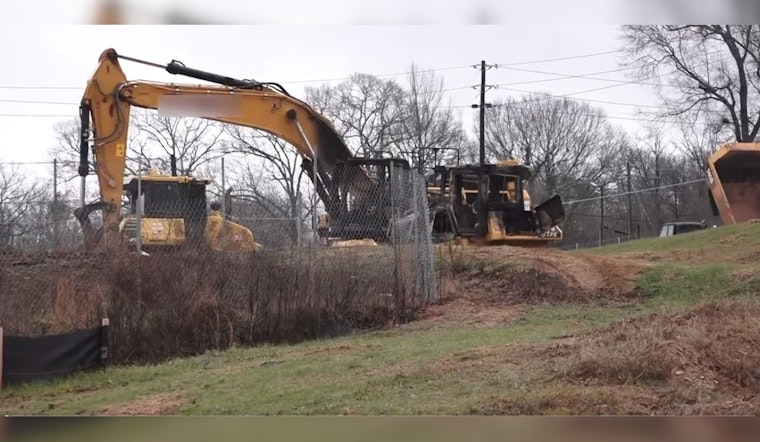
Atlanta has been wrestling with a firestorm, not just of the literal fires that have recently been set, but also with the burgeoning costs associated with the controversial public safety training center, often referred to by its opponents as "Cop City." The site has been a beacon for protest, and now, officials say it's the catalyst behind a ghastly rise in construction and security costs.
Friday's early morning fire believed to be linked to ongoing protests against the planned facility, at a construction site just blocks away from the training center's location, was quickly extinguished without injury, according to FOX 5 Atlanta. Atlanta's Fire Chief Roderick Smith and Police Chief Darin Schierbaum pointed to arson, with Smith deeming the act "absolutely horrendous."
The Atlanta Fire Rescue Department (AFRD) & @Atlanta_Police need your help to find the people responsible for destroying construction equipment. pic.twitter.com/XJLAxcfV8j
— Atlanta Fire Rescue (@ATLFireRescue) January 26, 2024
With no group claiming responsibility, the incident rests in a series of attacks causing outcry among city officials. Atlanta Deputy Chief Operating Officer LaChandra Burkes briefed City Council members on the financial toll of these acts, reported by 11Alive. The project's cost skyrocketed by nearly $20 million because of these incidents, with the total price tag now standing at $109.65 million, soaring above the original $90 million estimation.
Burkes underscored that the taxpayers wouldn't bear these new burdens, declaring that contingency funds and private donations would fill any financial voids. According to 11Alive, she remained optimistic, stating, “We are confident, in working closely with the foundation, that any gaps in this project will be filled.” Despite the defiance of city officials, the “Stop Cop City” movement has left an indelible mark on both the site and the city ledger.
The staunch opposition to the project stems from concerns about the militarization of the police force and environmental impacts on a community that is both poor and majority Black. Supporters counter that Atlanta necessitates updated facilities to train officers more adeptly, hoping to mitigate improper use of force. Amidst the rubble and burning questions of cost and consequence, Atlanta girds itself for more than just the construction of buildings, but of ideals that are clashed as much on the streets as they are in the ledgers of power.





