

























































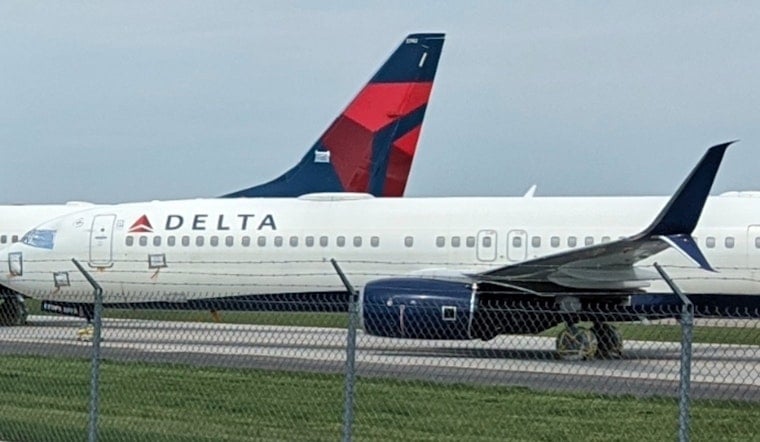
A Delta Air Lines flight bound for Orlando never made it off the ground in Atlanta after its crew smelled fumes in the flight deck, triggering an emergency evacuation down inflatable slides right on the taxiway. Delta Air Lines Flight 2204, a Boeing 757 carrying 199 passengers and six crew members, had just departed Hartsfield-Jackson Atlanta International Airport when the crew declared an emergency and turned back. No injuries were immediately reported among those aboard.
The crew followed standard procedures in returning to the airport, according to a Delta spokesperson quoted by WSB-TV, who said the flight crew followed procedures to return to the airport after reports of fumes in the flight deck. First responders met the plane on the taxiway, and passengers and crew evacuated the aircraft via emergency slides before being bused back to the terminal. Delta is reaccommodating the Orlando-bound travelers on another flight, and the airline says its maintenance teams will inspect the 757 to determine the cause of the reported fumes.
Delta Apologizes as Slide Evacuation Plays Out on Tarmac
A Delta spokesperson described the incident plainly: a slide evacuation occurred on a taxiway, and customers are being reaccommodated on a new aircraft. The spokesperson also said that safety is paramount at Delta, and the airline apologizes to customers for their experience, the station's report notes. The scene unfolded on the taxiway network at what remains the world's busiest airport — Hartsfield-Jackson processed more than 106.3 million passengers in 2025 and averages over 290,000 travelers a day, according to International Airport Review.
Federal safety standards require commercial jets to prove that every occupant can get out via slides within 90 seconds using only half the available exits, a benchmark set by the Federal Aviation Administration and international regulators, as detailed by Forbes. That same outlet reported that the FAA issued a safety alert in September 2025 warning that passengers who stop to grab carry-on bags during an evacuation create dangerous aisle bottlenecks that can blow past that 90-second survivability window.
How Engine Fumes Reach the Cockpit
The mechanics behind cockpit fume events trace back to how most commercial jets breathe. Airliners typically draw cabin and flight-deck ventilation from bleed air pulled directly off the main engine compressors, meaning worn engine seals or hydraulic leaks can let vaporized chemical contaminants seep into the air supply, according to the International Federation of Air Line Pilots' Associations. Federal regulations require commercial aircraft to supply at least 0.55 pounds of fresh air per minute per occupant and mandate that airlines file Service Difficulty Reports whenever cabin smoke or fumes occur, though the Federal Aviation Administration maintains no official legal definition of a fume event.
That regulatory gap has drawn attention in Washington. In September 2025, a bipartisan group of lawmakers petitioned the FAA administrator to speed up standardized toxic fume reporting and enforce cabin air quality mandates required under the FAA Reauthorization Act of 2024, per the Office of Congressman Chris Pappas. Flight 2204 was operated by a Boeing 757-200 that had been in active commercial service for more than 24 years, according to Trip.com, at a moment when Delta operates the world's largest 757 fleet but has been accelerating retirements of the aging jets, whose 757-200 sub-fleet averages roughly 28 years old, per Simple Flying.
Not the First Slide Evacuation at This Atlanta Hub
Delta's Atlanta hub has seen this scenario before. In January 2025, another Delta Boeing 757 carrying 201 passengers was evacuated via emergency slides on an Atlanta runway after the crew aborted takeoff over an engine issue, resulting in four minor injuries. It's part of a broader pattern of fume and smoke incidents across Delta's network in recent months — a Delta flight diverted to Oakland in April after an unusual cabin odor prompted a maintenance inspection and passenger rebooking. Delta maintenance teams are now expected to examine Flight 2204's 757 to pin down exactly what caused the fumes reported in the flight deck.




_(cropped).jpg)