

























































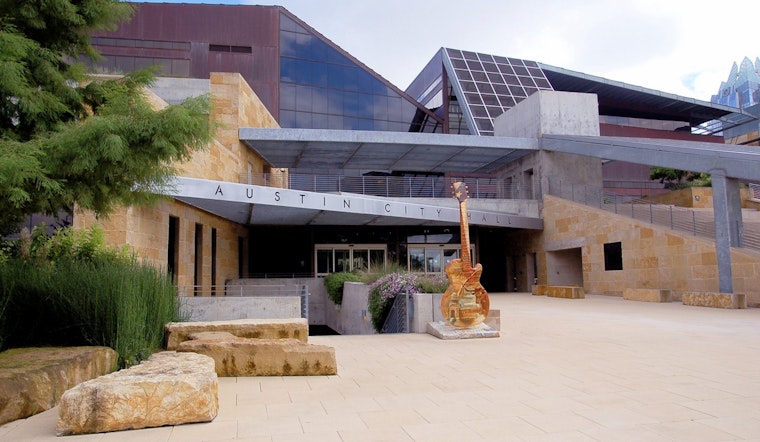
The debate over the teleworking future of Austin heated up as the Planning Commission, by a 10-2 vote, chose to recommend to the City Council a series of amendments geared to shape the city’s telework policy. While the pandemic thrust half the city's workforce into remote work, the interim city manager had been resistant to making such an arrangement permanent. Yet, the City Council took a stance favorable towards increasing the number of employees working remotely in line with transportation goals aimed at cutting down single-occupancy commutes, according to a report by The Austin Monitor.
Last year, after the Planning Commission initiated amendments to Austin’s Strategic Mobility Plan, controversy arose regarding the policy's particularities. Especially involved in this dialogue, Commissioner Felicity Maxwell praised Travis County’s robust teleworking strategy, which according to her, enhanced recruitment by making 75% of its workforce eligible for telework. She lobbied for more ambitious amendments, proposing a staggering 25% of Austin locals to work from home by 2039 and for 85% of the eligible city employees to telework. “We know we’re not hitting our mode-share goals. We’d like to encourage this type of teleworking,” Maxwell told The Austin Monitor. However, concerns about management autonomy led to her amendment's rejection.
Commissioner Adam Haynes, highlighting the need for managers to craft their policies, voiced opposition to Maxwell's approach, suggesting it infringed on departmental oversight. “We are dictating, as a policymaking body, personnel decisions here. And that’s outside our scope,” Haynes explained in a session discussed by The Austin Monitor. Haynes subsequently introduced a softer amendment, pivoting from a directive to an encouragement for the city to foster telework-friendly policies, which gained passage with a 7-5 vote.
Offering a divergent view, Commissioner Awais Azhar argued that aggressive telework goals could act as levers for reaching wider city objectives. “Instead of sitting in this building and constantly asking Amazon or Google to figure out how to change their personnel policies – something of which we have no control here – we are in the city of Austin and have the ability to use all of our resources, our personnel, our public property, our technology, the way we do carbon emissions, the way we use energy. All of these different things, I think, help us move our goals forward,” Azhar advanced in his appeal to the commission, as noted by The Austin Monitor.
While the Planning Commission's recommendations have paved the path, the telework policy's future now awaits further deliberation during the City Council's public hearing, scheduled for February 15. With Austin's transportation and employment landscape on the cusp of evolution, the city stands at a crossroads between flexible work environments and traditional office-centric models.





