

























































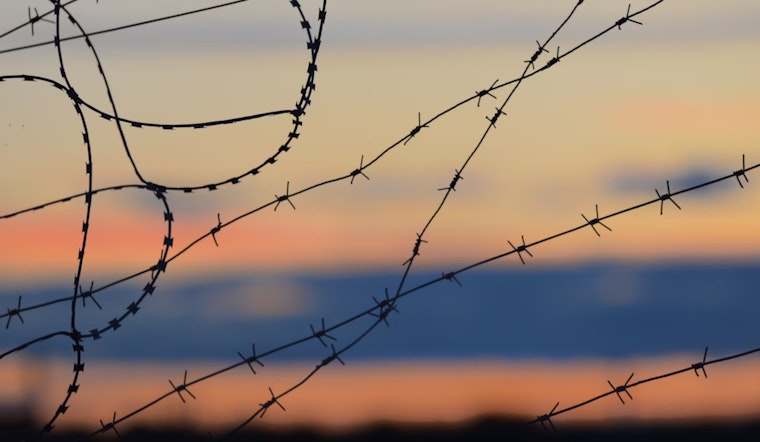
In a decisive move by the Supreme Court ealier today, federal Border Patrol agents were given the go-ahead to dismantle the controversial razor wire that Texas had installed along stretches of the US-Mexico border. The high court's narrow 5-4 decision unblocked a lower court's order, which had previously favored the Lone Star State's aggressive measure meant to curb illegal border crossings.
As reported by KSAT, the concertina wire spans about 30 miles near Eagle Pass, a section that has seen a surge in migrant crossings recently. The Biden administration has maintained that this installation not only hinders agents' abilities to perform their duties, but that federal immigration policies supercede Texas' individual efforts. Texas, on the other hand, has argued that the federal officials were removing wires to aid groups crossing illegally, and help transport them for processing.
The legal standoff reached the justices after a federal appeals court ruled last month against federal agents, instructing them to stop cutting the wire. This action was part of a wider conflict between Governor Greg Abbott's administration and the federal government regarding immigration enforcement, a battle that had escalated to the installation of floating barriers and the authorization for troopers to detain migrants on trespassing charges, as reported by MSN.
In their emergency appeal to the Supreme Court, the Biden administration, as Solicitor General Elizabeth B. Prelogar argued, sought to "restore Border Patrol’s access to the border it is charged with patrolling and the migrants it is responsible for apprehending, inspecting, and processing." Despite the majority's silence on their reasoning for ruling in favor of the administration, it was evident that the push to balance state power against federal mandates in immigration enforcement tipped the judicial scales.
Justices John Roberts, Amy Coney Barrett, Ketanji Brown Jackson, Elena Kagan, and Sonia Sotomayor sided with the Biden administration. Conversely, Justices Samuel Alito, Neil Gorsuch, Brett Kavanaugh, and Clarence Thomas backed the state of Texas, notating their dissent without further elaboration on the case that continues to frame the heated debate on the nation's approach to border security and immigration policy.





