

























































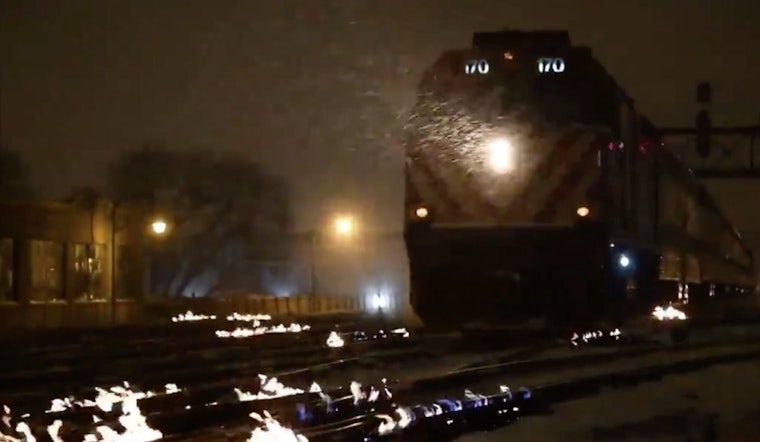
As the Windy City faces another fierce winter, local rail agencies are turning up the heat, quite literally, to keep the trains running on time. According to a recent report by the Chicago Sun-Times, Metra, Amtrak, and other rail operators are using gas-fed flames to thaw frozen switches – a common occurrence as temperatures plummet and the city sees its coldest stretch since 1996.
Feeling like 50 below zero outside, maintenance crews who have been working in the grip of Chicago's worst weather, use the flames to combat snow and ice that can lock up switch points, causing potential delays. These switch points are crucial for trains to transfer tracks smoothly, and if frozen, the trains enter a "fail safe" mode to prevent any mishaps, resulting in unwanted halts in service.
These fires that run adjacent to the rails are a component of various heating methods deployed by rail systems across North America, reported WGN-TV. They are not indicative of the tracks being set aflame but are rather part of a controlled and safe system involving natural gas-powered flames. Through this system, rails can be warmed sufficiently to mend "pull-apart" – where cold causes rails to contract and separate – and to clear clogged switches.
"It's important to note that diesel fuel combusts only with pressure and heat, not open flames. Therefore, operating our locomotives and railcars over the switch heaters is completely safe," Metra said in a statement provided by the Chicago Sun-Times. While effectively practical, the use of flames does come at a cost. A few railroad ties are replaced each year due to heat damage, but Metra insists on the safety of these operations, highlighting the control they have over the system.
In addition to the gas-fed flames, Metra also uses tubular heating systems and hot air blowers for managing rail temperature, as mentioned by Metra spokesman Michael Gillis in an interview with WGN-TV. Reminiscent of a bygone era, John Meyer, Metra's director of engineering, recalled on the rail system's website past methods that involved manually lighting kerosene pots placed along the tracks. Times have changed, and so have the methods, to the relief of safety-conscious commuters and rail operators alike.
As crews continue to burn the midnight oil, maintaining vigilance over the hardworking flames that cradle Chicago's vital veins of steel, the city anticipates a break in the freeze. Forecasts predict climbing temperatures into the upper 30s early next week, signaling a potential respite for both the tracks and those who toil to keep them clear.




