

























































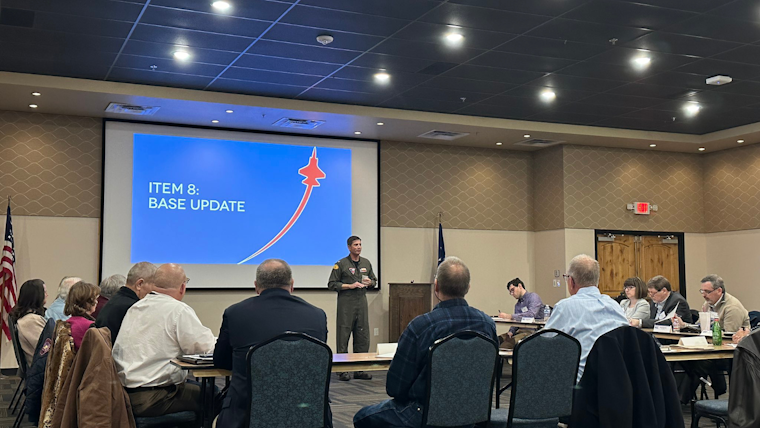
At the Pecan Grove Convention Center yesterday, key military and law enforcement officials convened for the NAS Fort Worth JRB Regional Coordination Committee Meeting. At the forefront of the gathering was Captain Beau Hufstetler, base Commander of the Naval Air Station Joint Reserve Base Fort Worth, who came to deliver an update on the base's current military initiatives. His comments were considered crucial against the backdrop of increased emphasis on inter-service cooperation and defense readiness.
Attendees were provided an opportunity to directly interact with military higher-ups and to fully understand the operations that might otherwise be shrouded in confidentiality and military jargon. It was a shared space designed to quickly foster dialogue across different branches and agencies. Christopher Cook, Chief of Police/Director of Public Safety at WSPD posted on social media, captured the essence of the event, highlighting "the outstanding partnership with the Naval Air Station Joint Reserve Base Fort Worth."
We hosted the @NASFortWorthJRB Regional Coordination Committee Meeting today at the Pecan Grove Convention Center.
— Christopher Cook (@cooktx) January 22, 2024
The base Commander, Captain Beau Hufstetler, provided an update to ongoing military initiatives. @RealNCIS Supervisory Special Agent Craig Shattuck provided an… pic.twitter.com/m4F2FRxkBQ
In a display of cross-departmental briefing, Supervisory Special Agent Craig Shattuck from the Navy Criminal Investigative Service (NCIS) also took to the podium. Shattuck's address shed light on the role and mission of NCIS, a subject of particular interest for local agencies looking to deepen their understanding of federal law enforcement procedures and collaborative opportunities.
This convergence of military and civilian oversight comes at a time when national security concerns compel agencies to more strongly integrate and consistently align their strategic objectives. The collective effort, as by Captain Hufstetler and Special Agent Shattuck, aims to bridge gaps that could become critical in times of crisis or heightened security demand.


