

























































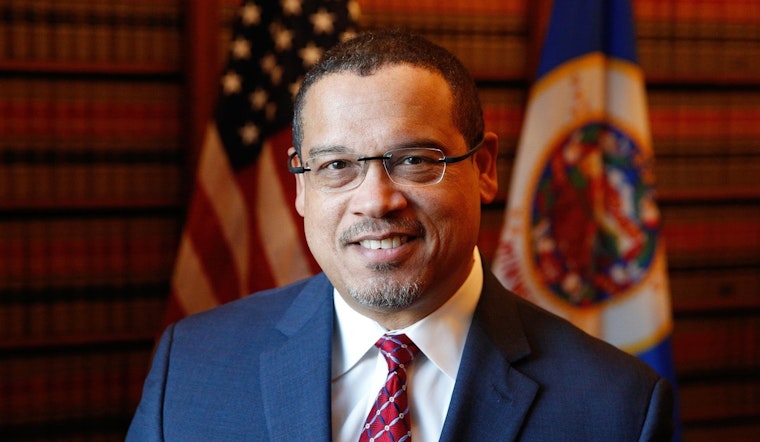
Minnesota Attorney General Keith Ellison has stepped onto the legal court to take on the NCAA and its transfer eligibility rule. The rule in question requires student-athletes to put their game on hold for a year if they decide to transfer schools a second time, a move Ellison and a coalition of states deem to be unfair and possibly unlawful, as reported by KSTP.
“Banning athletes from competing for a year after they transfer schools a second time is arbitrary, unjust, and in my opinion, illegal,” Ellison said. Not only is Minnesota backing the fight, but attorneys general from Colorado, Illinois, Mississippi, New York, North Carolina, Ohio, Tennessee, Virginia, West Virginia and the District of Columbia are also throwing their weight behind this legal blitz against the NCAA, as mentioned in coverage by KARE 11.
The group alleges that the NCAA's stance hinders the right of student-athletes to monetize their names, images, and likenesses — a hot-button issue in the continuing dialogue around amateur athletics and compensation. Ellison has positioned himself as a champion for these athletes, insisting the current state of play is unacceptable. "I am proud to be standing up for student athletes and fighting the NCAA’s senseless restriction on their ability to compete,” he further clarified.
The NCAA, which has not commented since mid-December, finds its one-year waiting period policy under scrutiny, at a time when the very foundations of college sports are being questioned. The legal scrimmage could revolutionize the playing field, introducing a system akin to free agency, although the NCAA fears this may lead to unchecked moves and upend the collegiate athletics ecosystem, KSTP reported. Already, a temporary restraining order issued in West Virginia has benched the contentious rule for the upcoming academic year, enabling athletes in winter and spring sports to play ball without fear of NCAA pushback.
With the preliminary injunction in place, the NCAA playbook may be forced to change dramatically in favor of student-athletes seeking to navigate their educational and athletic journeys more freely. A trial date remains elusive as the case continues to develop, leaving many to wonder what the next season will hold for the NCAA and the young competitors at its core.





