

























































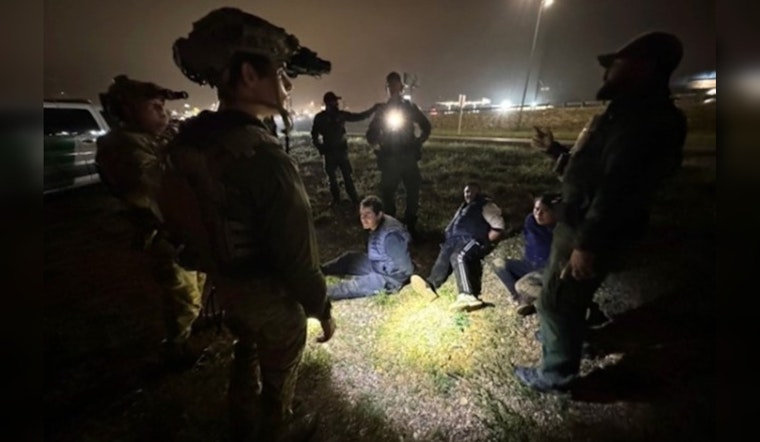
With the Biden administration under fire for what has been critiqued as lax border control policies, Texas Governor Greg Abbott has cranked up the heat with Operation Lone Star, a state-funded initiative targeting illegal immigration and drug trafficking. According to information released by the governor's office, the joint effort has culminated in more than 494,400 apprehensions of illegal immigrants and has facilitated upwards of 38,100 criminal arrests, tallying over 34,600 felony charges.
Amassing a staggering collection of seized narcotics, Texas DPS and the National Guard have reportedly confiscated over 453 million lethal doses of fentanyl, a synthetic opioid that has fueled a public health crisis across the country, the perils of which have echoed through shattered families and overwhelmed medical facilities. However, the operation doesn't stop at the border, Texas has bused over 12,500 migrants to Washington, D.C. since April 2022, and numbers swell when counting those sent to New York City and Chicago, with over 35,600 and 29,400 respectively; similarly, Philadelphia and Los Angeles have received over 3,400 and 1,400 migrants as part of Texas's response to an immigration system perceived as broken.
The operation's expansive reach has stratified into a political talking point, culminating in a question that probes the essence of federal responsibilities versus state intervention. Governor Abbott maintains that these stringent measures are a direct consequence of President Joe Biden's failure to adequately secure the border–a claim that the administration has contended with varying defenses and policy proposals.
Supporters of Operation Lone Star argue that each arrest, each interdiction of contraband, represents a victory for the safety of Texan communities and by extension. The nation, suggests that if not for the initiative the apprehended individuals would have otherwise integrated into society, carrying the potential for crime and disorder. This narrative, put forth by the governor's office, underscores a gubernatorial commitment to law and enforcement in the absence of what they term as federal inaction. Yet detractors question the ethical implications of such state-level actions, pointing to the human costs, the strain on resources, and the larger conversation regarding immigration reform which seems to be a complex challenge eluding straightforward solutions.
Texas officials have not shied away from broadcasting the counts of migrant busses traveling to various cities, an act which critics have labeled as political theatrics rather than genuine policy moves. The governor's office insists that Operation Lone Star continues to "fill the dangerous gaps created by the Biden Administration’s refusal to secure the border," according to a statement. This rhetoric has captured the attention of the nation, casting a spotlight on the southern border as a battleground for ideological and policy-driven conflict as the U.S. grapples with the balance between maintaining security and honoring its history as a beacon for those seeking a better life.




