

























































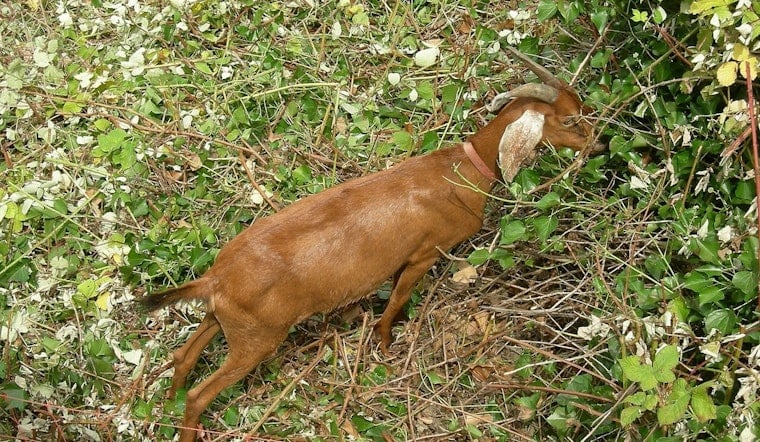
A Spanish goat on a ranch in the northwest corner of Edwards County, south of Sonora, has tested positive for anthrax, prompting state officials to quarantine the property. The detection, confirmed Wednesday, August 12, is the first reported anthrax case in Edwards County in 2026 and the second confirmed case in Texas livestock so far this year.
The Texas Animal Health Commission detected the bacteria in the goat and moved to quarantine the premises, according to MySA. Edwards County sits roughly 100 miles west of San Antonio and has a population of less than 1,400 people, but it is one of the nation's premier goat-producing areas — USDA Agricultural Census data shows the county's goat population outnumbers its human residents by roughly 22 to 1, according to KERA News. That concentration of sheep and goats, among the animals most vulnerable to anthrax, makes the region especially exposed whenever spores resurface.
The goat's case falls squarely inside what's known as the Anthrax Triangle, a naturally endemic zone stretching between Uvalde, Ozona and Eagle Pass that includes Edwards County. Per the Texas Animal Health Commission's own regional health guidance, the triangle also spans Val Verde, Uvalde, Sutton, Crockett and Kinney counties, where anthrax bacteria can survive in soil for long stretches before re-emerging.
Weather Set the Stage for a Summer Flare-Up
Texas experienced heavy rains and widespread flooding the month before this detection, and Edwards County's weather then swung the other direction, turning mostly hot and dry, with temperatures soaring into the 90s, per the National Weather Service, as reported by MySA. That kind of whiplash — wet, cool conditions followed by hot, dry heat — is the classic trigger for anthrax infections in Texas livestock, MySA notes.
The pattern lines up with decades of laboratory data. Diagnostic records spanning 1974 to 2022 from the Texas Veterinary Medical Diagnostic Laboratory show June, July and August are consistently the peak months for confirmed anthrax cases in the state's livestock and wildlife, as naturally occurring Bacillus anthracis spores persist in the region's alkaline soils for decades before weather shifts bring them back to the surface. Veterinary epidemiologists have also pointed to a biological vector at work: late spring rains followed by hot conditions trigger hatches of biting female flies that mechanically carry the spores between animals, according to the Texas Standard.
How Anthrax Shows Up in Animals and People
In livestock, anthrax causes high fever and bloody discharge, and infected animals can die within 48 hours of the first sign of illness, MySA reports. Bacillus anthracis is the bacterium behind the disease, and cattle, sheep and goats remain among the most susceptible species when they ingest spores from contaminated soil, plants or water.
Humans can become infected too, typically after contact with infected animals or carcasses. The illness takes different forms depending on how someone is exposed. Cutaneous anthrax, the most common route, occurs when bacteria enter a wound or scratch on the skin, causing itchy blisters or bumps followed by a painless black sore. A CDC investigation documented one such case over the winter of 2023–2024, when a Texas rancher developed arm lesions 11 days after butchering a lamb that died suddenly on a property adjacent to the Anthrax Triangle, according to the CDC.
Gastrointestinal anthrax, the rarest form of the infection in the United States, occurs after eating raw or undercooked meat from an infected animal and brings fever, chills, sore throat, nausea, vomiting, diarrhea and headache. Inhalation anthrax, which happens when someone breathes in spores, is the most fatal form in humans and can cause severe lung damage — untreated, it carries a fatality rate as high as 95%, MySA reports. Treatment for inhalation anthrax includes powerful antibiotics, antibodies and antitoxins.
Quarantine and Vaccination Protocols Now in Effect
The Edwards County premises has been quarantined, and state biosecurity rules leave little room for improvisation once a case is confirmed. Livestock carcasses infected with anthrax must be completely burned on-site until thoroughly consumed, along with contaminated bedding and manure, rather than buried or moved, since opening an infected carcass exposes bacterial cells to oxygen and triggers spore formation in the soil, according to guidance from Texas A&M AgriLife. Regulations also require that a quarantined premises stay restricted for at least 10 days after every animal on the property has been vaccinated, per Farm Progress.
The Texas Animal Health Commission is recommending that ranchers vaccinate their livestock and take precautions — wearing gloves and long-sleeved shirts — when handling suspected infected animals. Vaccination is cheap insurance against a disease that can wipe out an unprotected herd: doses run roughly $0.40 to $1.00 each through feed stores and veterinarians, according to StateImpact Texas. That protection matters most for domestic herds; free-ranging wildlife such as white-tailed deer can't be rounded up and vaccinated the same way, and a major 2019 outbreak in the Anthrax Triangle showed the cost of that gap, with wildlife biologists estimating deer mortality reached 75% to 90% across 2 million central acres and some large ranches losing their entire deer population, per NRA Publications.
This is the second anthrax detection in a Texas livestock animal in 2026. The first came in a steer in Briscoe County on December 31, 2025, with state health officials confirming that case on January 6. Anthrax has also turned up in the Texas Panhandle in prior years, including 2020 and 2023, underscoring that while the Anthrax Triangle counties see the most consistent activity, the disease's reach in Texas isn't confined to a single region. Anyone with questions or a suspected case can call the TAHC anthrax hotline at 1-800-550-8242.





