

























































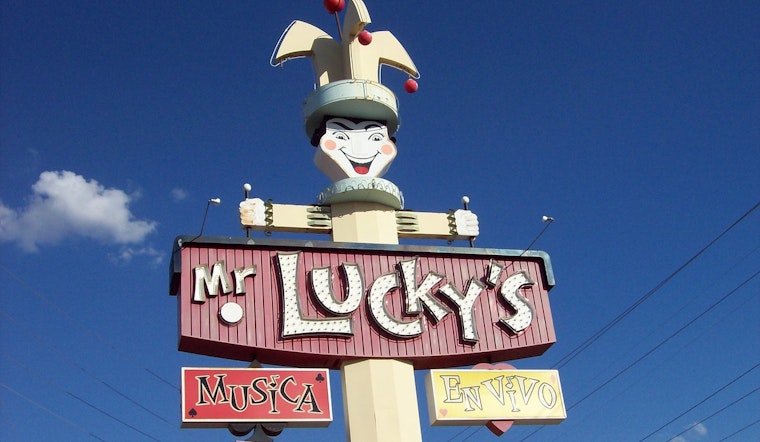
For nearly four decades, Mr. Lucky's was the epitome of nightlife in Phoenix, a city not exactly known for understatement when it comes to having a good time. According to the Phoenix New Times, the honky-tonk at Grand and 36th Avenues had its heyday as a country bar that saw the likes of country and rock legends. It opened in 1966 and closed in 2004, leaving behind a legacy of neon lights, live music, and a 50-foot-tall sign that became a beacon for fun in the Valley of the Sun.
Lamenting the loss of such an iconic spot, the glory days of Mr. Lucky's were brought to life once more in an article published by LCB. They talked about the '80s hotspot where parking was scarce and the nights were long. With space for 6,000 cars, the club's lot was a testament to its popularity, but finding a spot often meant negotiating with locals for an improvised parking space.
The roster of artists who took the stage at Mr. Lucky's is a who's-who of American music royalty. Willie Nelson, Johnny Cash, and Glen Campbell were just a few of the names that graced the club's stage, drawing sell-out crowds and creating legendary Phoenix nightlife memories. The venue also hosted a variety of artists in its basement rock and pop setting, adding a different flavor to the mix. Wanda Jackson even recorded a live album there in 1969.
But as reported by the LCB, Mr. Lucky's was not just about the music. For many like the article's author, it provided a lifestyle of "writing and photography, gambling and women" all under one roof. The establishment's dark side was especially palpable downstairs, where rock bands took the stage in a setting that was "absolutely more decadent and sinister" compared to the bright country scene upstairs.
Despite multiple attempts to revive the space post-closure, with ventures such as a Latin club and furniture store, none have managed to recapture the former glory of Mr. Lucky's. The Phoenix New Times galvanized this sentiment with a collection of photos, capturing the essence of what made Mr. Lucky's a landmark destination for fun and music in Phoenix. As years have passed, the nightclub's once-thriving parking lot stands empty, overgrown with tumbleweeds—a stark contrast to the packed and lively scene of its prime. Mr. Lucky's, once a hub for entertainment and social life in Phoenix, now exists only in the memories of those who experienced its neon-lit nights; the giant jester sign slowly fading into the backdrop of a city that has moved on.





