

























































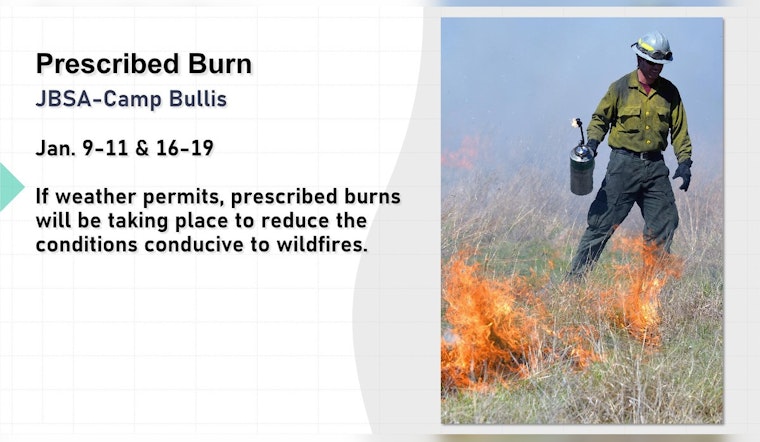
Residents across San Antonio's North Side were treated to a hazy day yesterday as a prescribed burn at Joint Base San Antonio-Camp Bullis sent thick smoke billowing into the sky, alarming locals yet posing no immediate danger. The burn, confirmed by military officials, was part of a series of controlled fires aimed at reducing wildfire risks by clearing out dense brush and other potential fuel sources. Countless concerned citizens contacted media outlets, with KSAT 12 fielding numerous reports.
Joint Base San Antonio officials had previously announced the prescribed burns, which are set to continue on January 16-19, if the weather cooperates. The charcoal embrace that shrouded the city, while startling, was entirely expected. "This proactive measure aims to reduce hazardous fuels within the installation, mitigating the risk of intensified wildfires," JBSA stated in a Facebook post.
On Tuesday, teams at Joint Base San Antonio began the burn after ticking off all the boxes on a safety checklist and conducting a trial fire. The operation was set to scorch around 600 acres that day, with Lt. Col. Gina “Flash” McKeen confirming to the Express-News that the process was smooth and under control. Despite the high winds that have swept through the region, the action was executed as planned, raising no immediate red flags regarding public safety or air quality.
Spectacular as the smoke was even visible from space, officials were quick to alleviate any fears of an actual wildfire breakout. “We make every effort to make sure the smoke goes up, and away from residential areas and schools,” McKeen told the Express-News. With the winds tapering by 3 p.m., as noted by Express-News meteorologist Anthony Franze, the hope was that any remaining smoke would continue to dissipate, clearing the air both literally and figuratively for the community.
As the city looks onward, further burns are scheduled to cover roughly 900 acres more over the coming days of January, conditional upon favorable weather. The meticulous planning for the burns, including collaboration with local fire departments, reinforces the strategic nature of these measures, designed for long-term protection against the unpredictable wrath of wildfires. Meanwhile, the residents of San Antonio are left to marvel at how something so routine can momentarily blur the lines between safety operations and the raw power of natural elements.


