

























































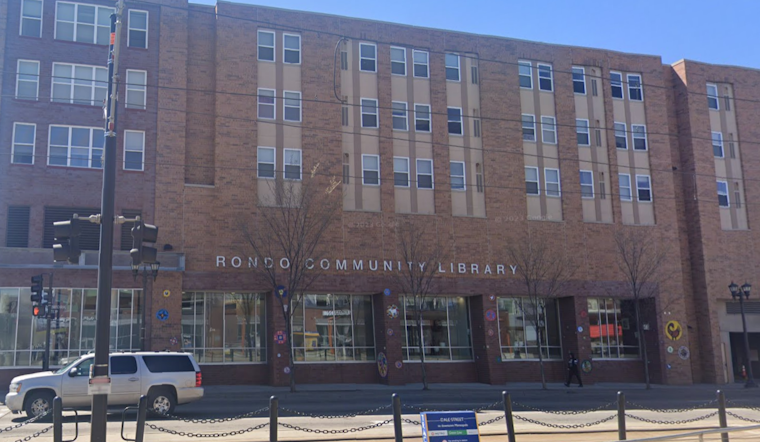
Once a vibrant hub for African-American culture and entrepreneurship, the Rondo Neighborhood in St. Paul, Minnesota, stood as a symbol of Black prosperity, akin to the famed Black Wall Street. However, this economic and social nucleus was devastated when the construction of a federal highway tore through its heart, displacing residents and erasing decades of history. The stark realities of this loss are now being scrutinized by the community's youth, aiming to confront and correct the insidious inequity that such actions wrought.
An update shared by Mayor Melvin Carter on his official X account highlights the current efforts to examine the past, stating, "Our historic Rondo Neighborhood was a bustling Black Wall Street — before the federal highway was built." The Mayor's post underscores the ongoing struggles against a legacy of destruction and displacement that plagues not just Rondo, but numerous Black communities across the United States. The Rondo Neighborhood's tale is one of many echoes, where infrastructural development has often come at the expense of African-American communities and their thriving economic centers.
Our historic Rondo Neighborhood was a bustling Black Wall Street — before the federal highway was built. What remains is scarred from destruction and displacement. It's a story penned in communities across our nation. It's also a story our youth are examining to address inequity. https://t.co/pv9BPSsLnZ
— Mayor Melvin Carter (@MayorCarter) January 22, 2024
As the shadow of the past looms over the present, the young voices of Rondo acknowledge that historic injustices have laid a heavy burden upon their neighborhood, setting them at a systemic disadvantage. In response, they are digging into history, education as both a tool and weapon, to address the disparities that continue to linger. The efforts aim not only to reclaim the narrative but also to rebuild, not as Rondo was—because what was can never be entirely resurrected—but as something that honors what once stood.
Dismantling the infrastructure of inequity requires the awareness and action of all generations, yet it is the youth leading the charge in Rondo. By confronting the erasure of their neighborhood's prosperous legacy, they seek to ensure that the same forces that undid their ancestry do not repeat. Their quest for redress is all the more critical as they face the contemporary challenges of gentrification and economic displacement, issues that disproportionately affect communities of color. The Rondo Neighborhood's story is a cautionary tale, a reminder that progress for some should not come cost of the livelihood of others.


