

























































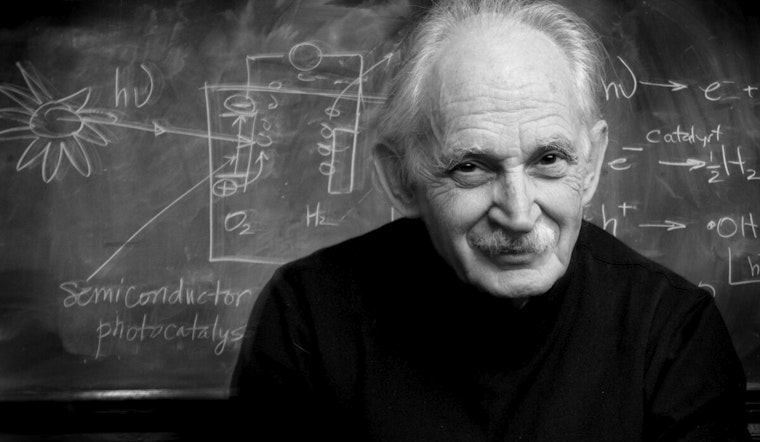
The scientific community in Austin, Texas, is mourning the loss of a renowned figure in the field of electrochemistry. Allen J. Bard, a pioneer revered as the "father of modern electrochemistry," passed away at 90. Bard's decades-spanning career at The University of Texas at Austin cemented his position as an icon in scientific discovery, earning him respect and numerous accolades across his lifetime.
Bard, after earning a Ph.D. from Harvard University, joined UT Austin and began to slowly but persistently transform the landscape of electrochemical research. He was instrumental in the development of the scanning electrochemical microscope—an innovative tool that has since become indispensable in various scientific sectors. According to a statement from UT Austin President Jay Hartzell, "It is well documented that Allen’s work transformed his field. Yet equally important was his devotion to his students and preparing them to impact our world for the better." Bard's trajectory of success was characterized by concrete contributions as well as inspiring mentorship that spanned generations of scientists.
During his tenure, Bard was recognized with prestigious awards including the 2013 National Medal of Science and the 2019 King Faisal International Prize in Science. His research not only facilitated the discovery of new materials for technology such as solar cells and batteries, but it also played a role in medically consequential areas like the detection of cancer cells. With over 1,000 academic papers, three authored or co-authored books, and more than 30 patents to his name, Bard’s legacy stands firmly rooted in his boundless curiosity and dedication to pioneering scientific development.
Allen Bard's humility was another facet of his character, often overshadowed by his monumental achievements. He once stated in an interview on NPR's "Science Friday," "We all work on this [science] because we like it and because we understand that we’re building a structure...And we each put in a little brick here and there. If everybody puts in the right bricks and everybody works hard at it, you build a big structure of science, and it’s not so important who put the bricks in." His down-to-earth perspective resonated deeply with his colleagues and the many students he profoundly influenced throughout his career. His teachings aimed to consistently prepare researchers to lead ethical and impactful scientific careers, contributing substantially to the tapestry of modern science.
Bard's imprint on electrochemistry extends globally, with his research spanning various critical applications including clinical diagnostics, biomedical research, DNA sensors, biodefense sensors, drug screening, and environmental monitoring systems. The legacy of Allen Bard will undoubtedly endure, as his work continues to shape future discoveries and innovations long after his passing. The University of Texas community and countless individuals who have benefitted from his tutelage, findings, or both, reflect on a life dedicated to the betterment of society through science. According to a UT Austin tribute, as Bard’s spirit endures, the impact of his work and his influence on shaping scientific minds will remain felt for generations to come.





