

























































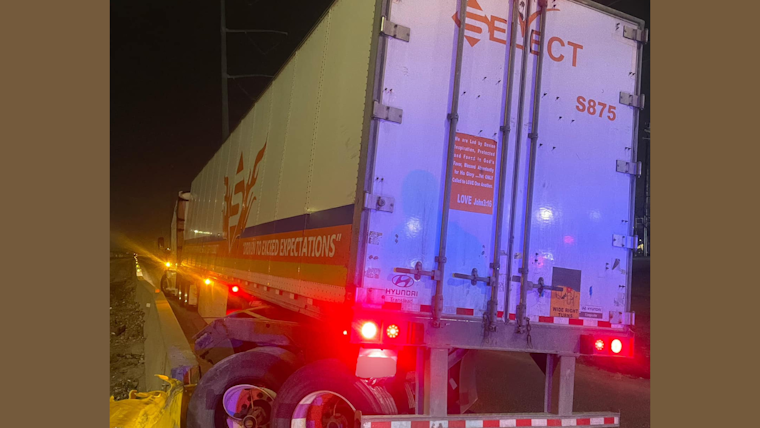
Big rigs and Jersey barriers don't mix—that's the lesson from a traffic snafu on the LBJ Expressway, where an 18-wheeler collided with a barricade and caused quite the headache for Dallas drivers. The Garland Police Department reported that the accident, which took place at the entrance ramp to S/B LBJ at Centerville/Ferguson, involved the truck's back two axles becoming dislodged and completely blocking access to the roadway. Though no injuries were reported at the scene, the incident prompted officials to advise motorists to find alternative routes. "No access to S/B LBJ from Centerville/Ferguson. Seek alternative route," according to the Garland Police Department.
In the chaos of metal against concrete, the aftermath might have suggested an extended closure, yet the ordeal concluded with efficiency, the entrance ramp was reopened in less time than one might anticipate causing residents to breathe a collective sigh of relief and commute planners to scrap contingencies for prolonged disruption. "The entrance ramp is open. Please drive carefully and have a great day," per the Garland Police Department.
Transportation disruptions, especially those involving large commercial vehicles, underscore the interconnectedness of modern transit and urban planning, such an event impacts not just the immediate vicinity but has a ripple effect that challenges the patience and adaptability of thousands, as evidenced by the GPS maps lit up with red lines indicating sluggish or stationary traffic spreads like a spill in the hours following the collision. As traffic patterns normalize, the incident serves as a stark reminder of the importance of staying alert and being prepared for unexpected detours on the road, but also the collective sigh of relief that comes when the steel behemoths are hauled away, and we can once again proceed on our journeys.


