

























































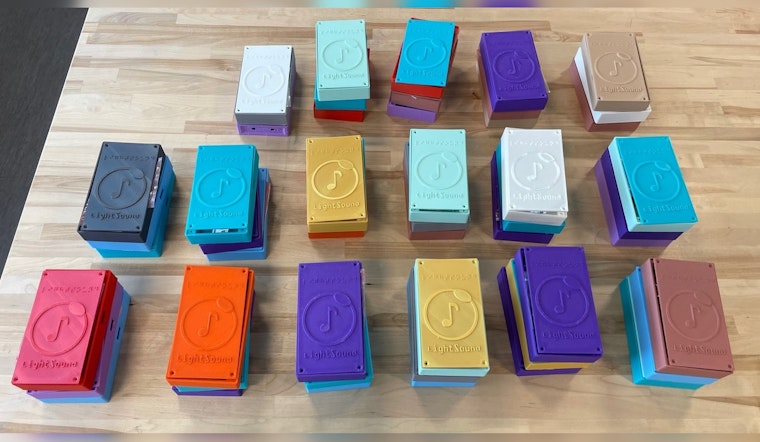
Witnessing the majesty of the upcoming solar eclipse on April 8 just became possible for Vermont's visually impaired community. A team from Harvard University, led by astronomer Allyson Bieryla, has engineered a device with the ability to convert the visual spectacle of an eclipse into an auditory experience. Dubbed the LightSound Device, this innovation is making waves by breaking down sensory barriers.
According to Austin's KXAN, Bieryla's team has crafted a gadget composed of three simple components: a light sensor, a microcontroller board, and a MIDI board, which together piece to transmute light intensity levels into distinct sounds. As described by Bieryla, "The bright bright sunlight will be kind of like a flute sound, then it goes to like a mid-range clarinet. And then it goes to like a low clicking sound," these devices present the eclipse in a new dimension for those who cannot see it.
Reaching out to the blind and low-vision community, the project has collaborated with visually impaired astronomers, including Wanda Diaz Merced, to refine the device. Visiting the University of Texas as part of their efforts to mass produce the technology, the LightSound team worked on constructing about a hundred units with the help of local community members and amateur astronomers such as Jason Jendrusch, who assisted the cause and felt touched by the overlapping of assisting those without visual capabilities and witnessing a rare event, as reported by KXAN.
In a statement obtained by Vermont Public, Bieryla shared her journey since 2017 in creating this device. The aspiration was simple: to birth an apparatus low in cost and globally accessible. Now, with over 800 units ready to be distributed for the April eclipse, this project aspires to envelop not just the visually impaired but also those who seek a novel eclipse experience. According to the plan, these devices will be in the hands of individuals through events, universities, libraries, and schools for the blind across the eclipse's path.
The devices are expected to not only spread across America but also go global, with the LightSound team expanding their reach overseas in anticipation of the 2026 European solar eclipse. Supported by prestigious foundations like the International Astronomical Union, the American Astronomical Society, the National Science Foundation, and the Simons Foundation, these devices are ensured to reach many and nurture an inclusion never seen before in celestial observation. The reaction from communities, as Bieryla passionately expressed, is nothing short of "phenomenal," touching lives by including those who have previously felt forgotten.





