

























































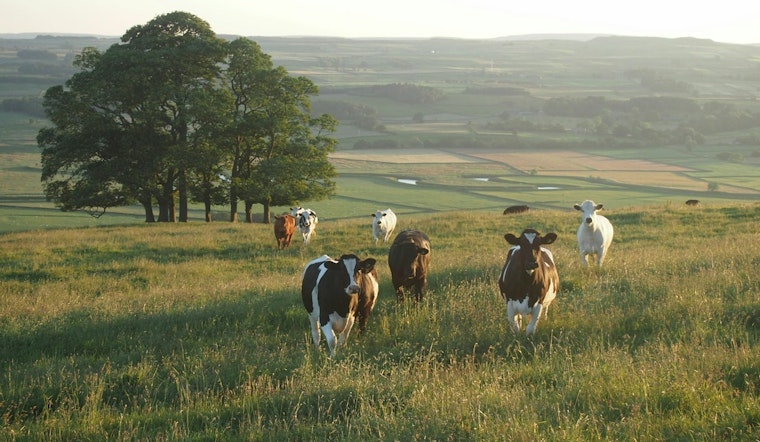
Residents of Adora Trails in Gilbert, Arizona, are dealing with an utterly messy situation: cows marauding through their neighborhood. The bovine invaders have been described as leaving behind "giant puddles of cow poop," which are not only a smelly nuisance but also a potential safety hazard. As Josh Havens, a 10-year local, told AZFamily, the cows "come through the fences here and come into the neighborhood." Havens, initially found their presence charming, but the sentiment isn't shared by all, especially his 12-year-old son, Owen, who complains about having to detour on his walks when the herd is in the way.
The problem seems partly due to off-roaders cutting barbed wire to access desert areas south of the homes, creating opportunities for the cows to enter. The Town of Gilbert, clarifying its stance, stated, “Without knowing where the animals come from, this can fall under the Town of Gilbert Municipal Code or Gila River Indian Reservation,” according to a statement they sent, explaining Arizona's open-range laws which put the responsibility of keeping livestock off one's property onto the property owner. This livestock legal limbo leaves residents unsure of how to proceed and with few solutions to stop the bovine procession.
Adding to the cow chaos, similar situations are stirring attitudes and legislation beyond Gilbert. In a different bovine-related development, the Gulf of Alaska's Chirikof Island is home to over 2,000 free-roaming cows. These cattle, left behind from attempts at ranching livelihoods that date back to Russian colonization and Alaskan gold rush era dreamers, have sparked debates about land use and the role of informal domestication in what can only be described as the farthest thing from pastoral America. The debate is anchored in a law, brought about by 1920s rancher Jack McCord, which authorized privately owned livestock to graze on public lands. This law, as described in a Wired report, impacts current conflicts over land use.
Where these cows are seen as invasive in Alaska, the U.S. Fish and Wildlife Service has been directed by Congress, pushed by Alaskan sentiment, to leave them alone, showcasing how visceral and rooted the connection to cattle can become. These issues are pertinent reminders that man's attempt to corral nature often wanders into a thicket of unintended consequences, resulting in an ironic twist where the cattle, not the humans, seem to dictate the terms of habitation and use of the land.





