

























































Clark County School District officials say scammers quietly siphoned about $1.4 million out of district coffers in 2022, luring staff into sending the money to bank accounts and cryptocurrency wallets that were anything but legitimate. Authorities say the scheme started as a business-email compromise that hijacked a payment meant for a Las Vegas contractor, and prosecutors now have multiple defendants on the hook. One of them has already told a judge she is ready to take a plea that could include naming co-conspirators and paying the district back.
According to the Las Vegas Review-Journal, CCSD accounting staff in July 2022 sent a payment intended for Boyd Martin Construction to a Huntington National Bank account that investigators say was controlled by a scammer. The attacker allegedly used email domains that closely resembled those of CCSD and the contractor to swap out wiring instructions. District records later showed unexplained wires, deposits and withdrawals in the weeks that followed.
How Investigators Say The Scam Worked
Investigators tracked deposits from CCSD into several U.S. bank accounts, then into cryptocurrency exchanges and wallets. Court documents and local reporting describe transfers that converted large sums to bitcoin, then split those coins across multiple addresses. At least one Bank of Oklahoma account opened under the name Jordan Hensel Phelps Construction received about $190,000, and agents linked other deposits to accounts in Phoenix and Chicago as part of the same network of transfers.
8 News Now reports that some of those cryptocurrency movements were traced through blockchain addresses and login activity that investigators say pointed to locations in Africa.
Charges, Pleas And A Possible Deal
Court records show several people have been charged and that multiple defendants have already pleaded guilty in connection with the diverted funds. Selma Jean Redmond pleaded guilty to two conspiracy counts and received a suspended 364-day jail sentence and up to one year of probation. Jennifer Walsh pleaded guilty and, according to investigators, took in about $95,000 and funneled cash through a bitcoin ATM in Indiana. Leslie B. Villarosa pleaded guilty in June 2024 and was given a suspended sentence with restitution and probation.
Prosecutors say Jasmine Nelson, accused of opening an account that received roughly $190,000, was found in Texas and extradited to Nevada. In court, she told a judge she intends to accept a plea that would require her to identify co-defendants and repay CCSD.
Why Tracing The Money Is So Tough
Once the money hit crypto exchanges and blockchain wallets, the trail became far more difficult to follow. Investigators say the quick conversion to cryptocurrency and rapid movement through multiple addresses and exchanges can obscure who really controls the funds. That pattern, which includes the use of bitcoin ATMs and fast conversion to crypto, has been flagged in law-enforcement reporting as a common way scammers try to launder the proceeds of big fraud cases.
As detailed in the FBI IC3 annual report, login locations tied to some of the crypto accounts in this case were traced largely to Ghana and Nigeria, and at least one exchange told investigators that an account was controlled by a person based in Nigeria.
What It Means For CCSD And Taxpayers
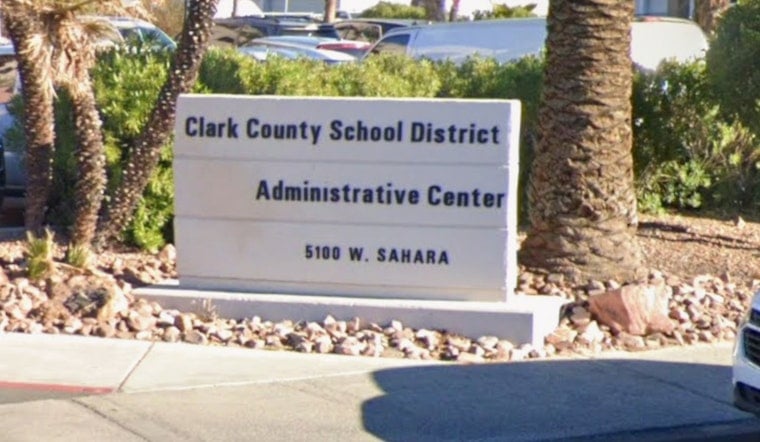
The money that vanished was earmarked for construction work, so its loss adds pressure to district finances that were already tight. Clark County School District’s administrative headquarters is at 5100 W. Sahara Ave., and the district posts communications and contact information for vendors and media on its website.
The investigation is still active, and prosecutors say they are working with federal partners to keep tracing the funds and bringing cases against anyone involved. Anyone who believes they have been targeted in a similar scheme is urged to report it to the FBI’s Internet Crime Complaint Center (IC3) and to local law enforcement.





