

























































Turning back the evolutionary clock, a new theory suggests that the growth of our ancestor’s brains might owe more to the zing of fermentation than to the heat of the fire. According to recent research published in Communications Biology, scientists are proposing that fermented foods could have provided prehistoric humans with the nutritional boost necessary for the brain expansion that defines our species.
While the use of fire and the development of cooking have long been credited with providing the caloric increase necessary for sustaining a larger brain, evidence of controlled fire doesn't appear until about 1.5 million years ago. That's a full million years after the significant hike in hominid brain size. "Brain tissue is metabolically expensive," said Erin Hecht, assistant professor of human evolutionary biology and one of the study’s authors, in a statement obtained by Harvard Gazette. She adds, "Whatever changed in their diets had to have happened before brains started getting bigger."
The accidental discovery of fermentation — likely through the caching of food which then underwent a natural chemical breakdown — is taking center stage in this new hypothesis. This pre-digested nourishment might have been more easily absorbed by the gut, providing enough energy and nutrients to sustain the larger brain without needing the benefits of cooked food.
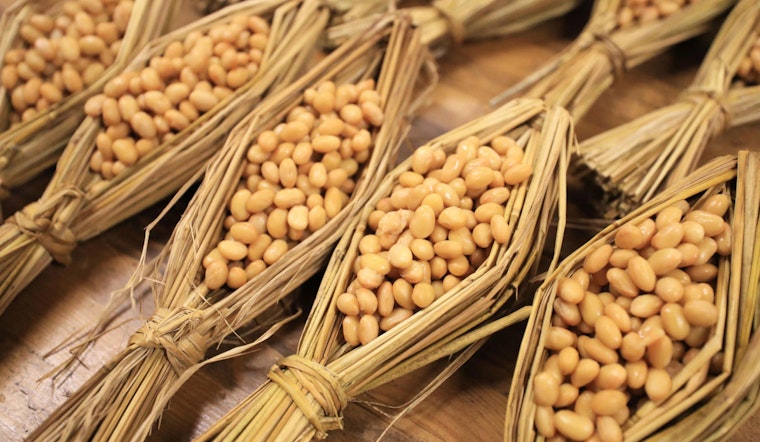
Hecht further suggests that the relatively smaller size of the human large intestine, compared to other primates, could be indicative of an evolutionary adaptation to a diet rich in fermenting foods. She quipped, "This was not necessarily an intentional endeavor. It may have been an accidental side effect of caching food." On top of that, every culture today embraces some form of fermented fare, from the cheeses of Europe to the fermented natto cherished in Japan. This ubiquitous human trait seems to point to a shared ancestral dietary practice.
The implications of this new vision of brain evolution do not just end with historical curiosity. Current research has been steadily drawing ties between fermented foods, a healthy gut microbiome, and both physical and mental well-being. Katherine L. Bryant, a co-author of the paper and a researcher at Aix-Marseille Université in France, told the Harvard Gazette that “This hypothesis also gives us as scientists even more reasons to explore the role of fermented foods on human health and the maintenance of a healthy gut microbiome.”
As research forges ahead, the connection between our dietary past and present health continues to unfold – perhaps our ancestors' penchant for pickled and fermented snacks set the stage not just for their survival but for the development of one of the nature's most extraordinary phenomena: the human brain.





