

























































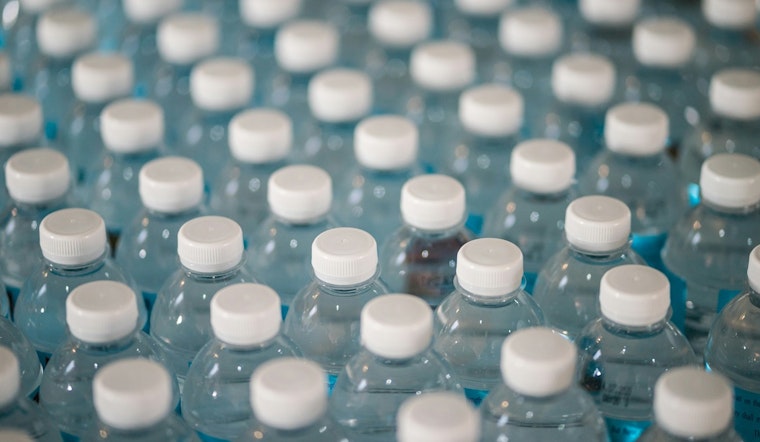
The refreshing allure of bottled water may now have a tinge of concern as recent studies reveal a profound nanoplastic presence in some of America's most popular water brands. A joint endeavor by Columbia and Rutgers universities has shed light on an invisible pollutant, finding that the average liter of bottled water might contain nearly a quarter million tiny pieces of nanoplastics. According to a study reported by Spectrum Local News, the measurements, alarmingly consistent across popular brands, hover around 240,000 particles per liter.
Facilitating these troubling discoveries are advances in scientific tools, including a dual laser microscope technique designed by Columbia physical chemist Wei Min, which identifies compounds by their chemical properties and how they resonate with the lasers. These minuscule particles are less than a micron, which for perspective, sits far below the width of a human hair at about 83 microns. Sold at a Walmart and considered common, the three brands studied by the team have not been disclosed, as further testing is deemed necessary before taking decisive action against any specific brand.
Nanoplastics' impact on health remains a pressing but unresolved concern, with study co-author Phoebe Stapleton, a toxicologist at Rutgers, admitting to Spectrum Local News, "We don’t know if it’s dangerous or how dangerous." Despite this uncertainty, the study has influenced personal choices, with several co-authors cutting back on their bottled water consumption, and leaning more towards filtered tap water.
Meanwhile, at the University of Texas, efforts towards fighting the invisible invasion of plastics have taken a tangible form. In an ingenious approach detailed by KXAN, Professor Guihua Yu and his team from UT's Material Science department have championed the use of hydrogels—materials notable for their capacity to weave a net fine enough to trap nanoplastics while repelling water. Previously applied in oil spill cleanups, hydrogels are being adapted into a promising filtration system, capable of purifying water to the nano level.
The revelation about bottled water and nanoplastics serves as a stark reminder of the pervasive nature of plastic pollution. The International Bottled Water Association has issued statements emphasizing the lack of consensus on the health impacts of nano- and microplastics, suggesting that alarm over these studies may be premature. However, amid global efforts to craft a treaty addressing plastic pollution, the sentiment that change is necessary and palpable, with researchers like Yu pointing towards reusable alternatives as a more sustainable choice.





