

























































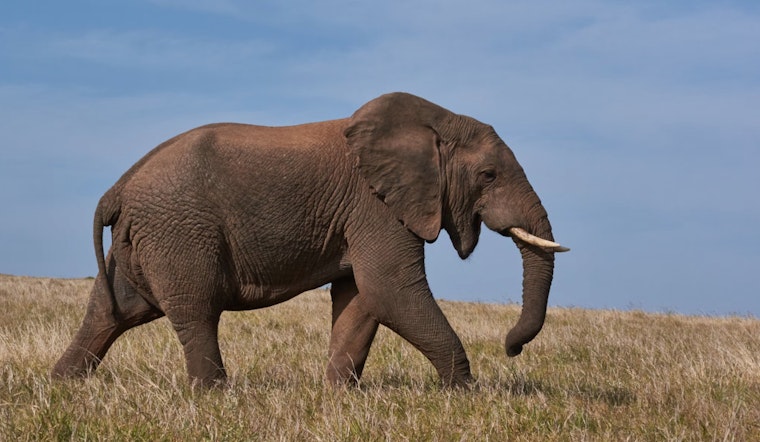
As climate change continues to accelerate, a groundbreaking study by the University of Massachusetts Amherst and the Wildlife Conservation Society indicates that it's the oldest African elephants that are set to suffer the most. Published in the journal PLOS Sustainability and Transformation, the research points to a stark finding: climate change could critically disrupt the survival rates of older elephants, leading to potential cascading effects on ecosystems and elephant populations.
A key area under the lens is the Greater Virunga Landscape (GVL), encompassing a vast 15,700-square-kilometer swathe across Uganda, Rwanda, and the Democratic Republic of Congo. Known for its rich biodiversity and significant elephant population, the GVL has witnessed a dramatic decline of these majestic creatures, now listed as critically endangered, according to the International Union for Conservation's Red List. As they play a crucial role in maintaining the ecological balance, by seed dispersion, forest management and contributing to soil fertility, the loss of older elephants could signal broader environmental distress.
The research team, led by Simon Nampindo, WCS Uganda country director, and Timothy Randhir, a professor of environmental conservation at UMass Amherst, pioneered a systems dynamic model, designed to project the potential futures of African elephants under varying climate scenarios. The model incorporates data on elephant populations, landscape changes, and temperature increases—from modest to more extreme projections—to examine how these variables impact different age groups within elephant herds. "For the first time, we're able to get a comprehensive vision of what the future might look like for African elephants in the face of climate change," Nampindo told UMass News.
Under every climate scenario studied, the findings were consistent: older elephants are at a disproportionately high risk. The implications of these losses go beyond the mortality numbers, "Elephants are matriarchal—their leaders are the older cows, and the herds depend on their wisdom, long memories and ability to outsmart prey, and if they are lost to changing climate, it will wreak havoc on the surviving, younger herds, as well as change the genetic profiles and structures of the herd," Nampindo explained. But there's a silver lining. The study not only highlights threats but also serves as a strategic tool to guide policy decisions towards elephant conservation.
Emphasizing the necessity of collaborative conservation efforts, Nampindo and Randhir stress the importance of robust anti-poaching campaigns and community engagement to safeguard elephants against threats ranging from poaching to habitat fragmentation. These strategies aim to mitigate the looming crisis and echo wider calls for conservation models that involve local, regional, and national entities. "If we can do a good job at protecting elephants, our efforts will reverberate to other species, such as lions and mountain gorillas," said Nampindo, reiterating the broader ecological benefits of elephant conservation efforts through WCS's dedicated programs.
The applicability of the systems dynamic model transcends elephant conservation. As Randhir points out, "the most exciting thing about this systems dynamic modelling is that it can be adapted to any migratory species that move across political boundaries, from fish to birds to lions." By offering a versatile tool for wildlife management, this research could potentially shape more informed and effective conservation policies globally, ensuring the resilience of not only elephants but a myriad of species threatened by the encroaching pressures of climate change.





