

























































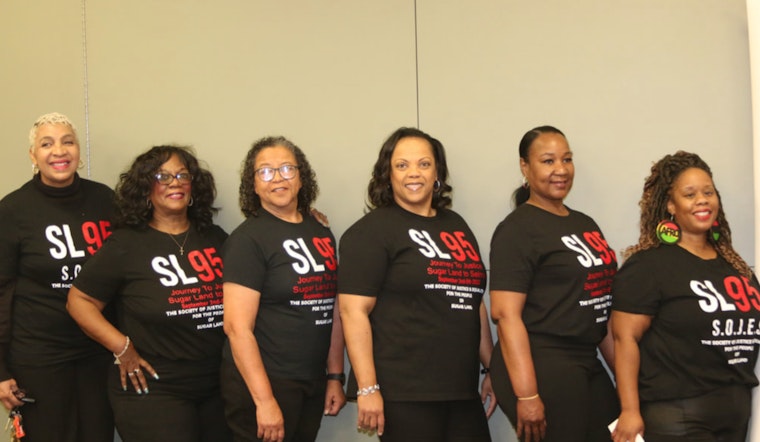
In Sugar Land, Texas, echoes of a somber past resurface as a local nonprofit, the Society of Justice and Equality for the People of Sugar Land, garners a $10,000 grant from the Honeyland Fund to create a mobile exhibit chronicling the harrowing history of convict leasing, as reported by the Houston Chronicle. This grant aims to amplify the stories of the Sugar Land 95, whose remains were discovered in 2018, and to educate the public on the abject conditions faced by these leased convicts who toiled in sugar cane fields post-Civil War.
With the planned mobile museum, the Society seeks to honor their memory and delve into the dark aspects of local history, furnishing details on the convicts, their grueling life, and their significant yet coerced contributions to building Sugar Land, the nonprofit’s president, Robin Cole, emphasized the necessity of this traveling exhibit, stating, "This 'dark history' must be told because there are no history books which tells the story of convict leasing as well as the positive contributions of the African American people in the building of Sugar Land," according to her interview with the Houston Chronicle.
Meanwhile, concerns are mounting over Fort Bend ISD's decision to erect another school on historically fraught land; this time in Richmond on what once was part of the Harlem Prison Farm, as detailed by Houston Landing, this site is feared to contain another burial ground, akin to the grave site found during construction on a previous prison farm, now the resting place of the Sugar Land 95.
As the district proceeds with its plans, purchasing 16 acres in July for $2.1 million and scheduled to break ground next year for a 1,000-student capacity school, the outcry for thorough compliance with state historical commission mandates intensifies; local activists, unsettled by history's potential repetition and what such ground may conceal, sharply question the rationale behind establishing educational structures on such historically sinister landscapes, not least because alternatives to better support underserved schools exist, "There are other schools in Fort Bend County that have historically been ignored, and maybe are under-resourced," Jay Jenkins, president of the Convict Leasing and Labor Project, divulged to Houston Landing.
Activists are beseeching Fort Bend ISD to exercise caution and prioritize proper validations, as stated by Reginald Moore's widow, Marilyn Moore, "They really need to do their due diligence,” she told Houston Landing, implying the urgency to guard against constructing the new elementary school atop another grave, a potential devastating oversight that could evoke the disquieting shadows of a bygone era that the Society of Justice and Equality for the People of Sugar Land seeks to illuminate with its forthcoming mobile exhibit.




