

























































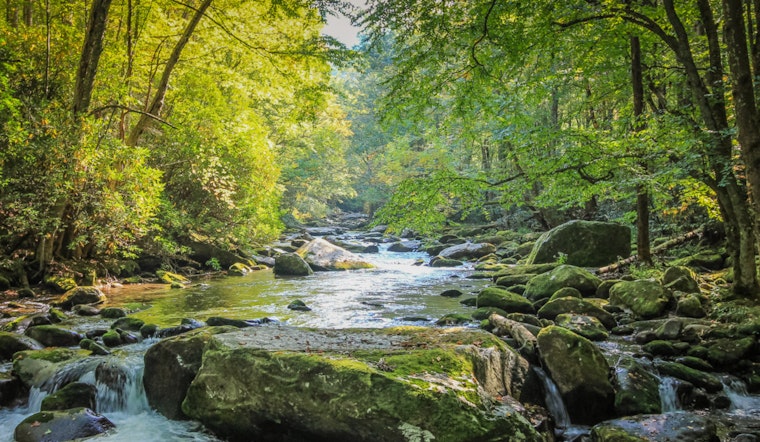
Scientists at the University of Massachusetts Amherst are changing the game in how we track CO2 emissions, uncovering that "carbonate buffering" plays a significant role in how streams, rivers, and lakes contribute to global carbon output. The recently released study in Global Biogeochemical Cycles indicates that this overlooked process might be why climate models have been off the mark.
UMass Amherst experts point out that inland waters release about 5.5 gigatons of CO2 annually, intersecting the carbon accounting challenge as this is nearly 15% of human-related emissions and the traditional methods used to pinpoint CO2 sources in waterways are disrupted by carbonate buffering. UMass Assistant Professor Matthew Winnick spelled out the issue, stating "much of this carbon seems to be produced cryptically, through carbonate buffering," which he describes as a "hidden reserve pool of CO2, replenishing carbon that is lost to the atmosphere, and ultimately increasing the amount of CO2 available for off-gassing."
The buffering process begins when CO2 dissolves in water, leading to a series of chemical reactions that can revert, with high levels of bicarbonate and carbonate turning back into CO2. This constant exchange can make a substantial contribution to atmospheric CO2 levels. In the case of alkaline waters, Winnick and co-author Brian Saccardi found that these hidden reserves can make up over 60% of emissions. Moreover, such emissions might not necessarily contribute to warming now, but could become a significant factor with climate change on the rise.
Citing the critical need for accurate source tracking amidst the ongoing climate crisis, Winnick explained that "the primary way we use isotopes to track sources is through their relationship with CO2 concentrations, but carbonate buffering causes these relationships to break down." According to the study, tracking multiple carbon isotopes, not just one, could be key to solving this puzzle despite the additional cost it may represent.
The UMass Amherst team is advocating for this comprehensive isotope measurement approach to better ascertain where the CO2 in stream systems is coming from, potentially honing in on the cryptic carbon culprits that have eluded scientists thus far. By applying knowledge gleaned from studying oceans to inland water systems, the researchers have taken a significant step towards a more complete understanding of carbon dynamics and its implications for our environment.





