

























































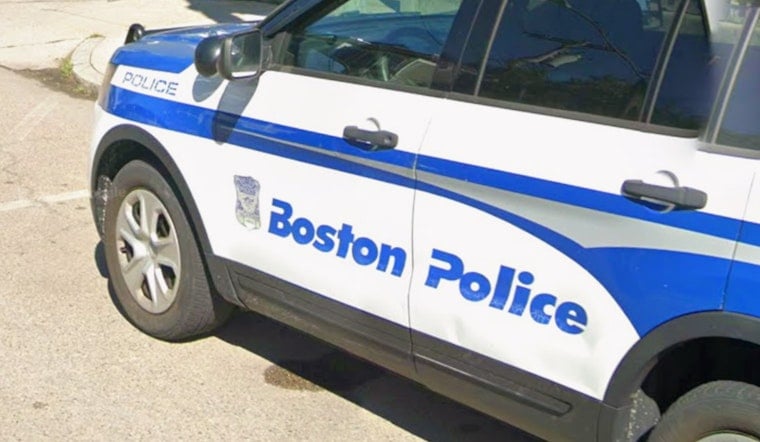
A 34-year-old man has been arrested in Boston on charges connected to an alleged sextortion scheme that targeted minors online, according to police. The arrest comes as the Boston Police Department continues to warn residents about a fast-growing form of digital blackmail in which criminals use fake profiles to obtain private images and then demand payment to keep them from being shared.
As reported by Newport Dispatch, sextortion typically begins on social media platforms, messaging apps, or online games, where criminals use AI-generated or stolen images to build trust with a target before requesting private photos or videos. Once a victim complies, suspects often threaten to share the material with family, friends, or school contacts unless they're paid, according to the police alert cited in that report. Investigators say these interactions are frequently reported on Instagram, Snapchat, and Wizz, and that suspects tend to move conversations quickly to different messaging platforms once contact is established.
How the Scheme Allegedly Unfolded
According to the same report, criminals running these schemes employ a range of pressure tactics beyond simple threats — including fake wanted posters, impersonation of law enforcement officers, and threats to contact a victim's school or a parent's employer. The Boston Police Department has issued a community alert warning residents about the growing threat, urging anyone targeted to stop communicating with the extortionist, document all interactions, and block and report the account.
Police have also cautioned victims about recovery scams, in which individuals or services falsely claim they can remove compromising photos for a fee. Authorities are instead directing targets toward the National Center for Missing & Exploited Children, which offers free sextortion resources, including its Take It Down service — a confidential tool that helps remove explicit images of minors from online platforms. The service works by generating a unique digital fingerprint, or hash value, of an image directly on a user's device, without ever uploading or viewing the underlying content, which allows participating platforms to detect and strip matching material across their networks, per the National Center for Missing & Exploited Children.
A National Surge in Cases
The Boston arrest lands amid a documented nationwide spike in financially motivated sextortion targeting young people. NCMEC received more than 50,000 CyberTipline reports of this kind in 2025 — an average of 137 per day — up sharply from roughly 36,000 reports in 2024. More than 5,700 of last year's reports came directly from minor victims themselves, the organization says, even as its broader tracking since 2021 has linked at least 36 teenage boys nationwide to suicide following financial sextortion plots.
Federal authorities have also stepped up warnings. On Safer Internet Day in February, the Federal Bureau of Investigation cautioned that paying an extortion demand rarely stops perpetrators from publishing or continuing to leverage compromising material, since offenders routinely come back demanding more money or more content. The FBI also recommends that parents initiate conversations with their children about the risks of communicating with strangers on digital platforms, and continues to warn families about the dangers baked into everyday online interactions.
What Massachusetts Law Allows Prosecutors to Charge
Massachusetts law gives prosecutors more than one avenue to pursue sextortion cases. Under General Law Chapter 265, Section 25, attempted extortion — maliciously threatening someone to extort money or compel action against their will — is punishable by up to 15 years in state prison, up to two and a half years in a house of correction, or fines as high as $5,000, according to the Massachusetts Legislature. When a case involves explicit images of minors, separate statutes under Chapter 272, Sections 29A and 29B apply, carrying mandatory state prison sentences of 10 to 20 years and fines between $10,000 and $50,000, per Sweeney & Associates, LLC.
Federal law has also expanded protections for victims. The TAKE IT DOWN Act made distributing nonconsensual intimate imagery a federal crime and required online platforms to build 48-hour takedown request systems by May, or face Federal Trade Commission fines of up to $53,088 per violation, according to The 19th News.
Boston's Track Record of Warnings
This isn't the first time Boston-area authorities have flagged the threat. In an April 2025 community alert, the Boston Police Department warned residents specifically about online romance scams and financial sextortion targeting teenagers and young adults, advising victims to file local police reports, FTC complaints, and FBI IC3 reports. Boston University Police previously noted that two BU students paid money to online sextortionists during the 2022–2023 academic year, part of a broader national pattern targeting college students and male minors. Southboro Police, in the eastern part of the state, issued a similar warning back in August 2023 after fielding multiple reports of teen sextortion, noting that perpetrators often shift conversations from open social platforms to private messaging apps to isolate their targets.
Authorities continue to urge anyone caught in one of these schemes to seek help from a trusted adult rather than face the situation alone. With reports climbing nationally and cases now surfacing in Boston, police and federal officials alike are emphasizing the same core message: engaging with the extortionist or paying rarely makes the threat go away.





