

























































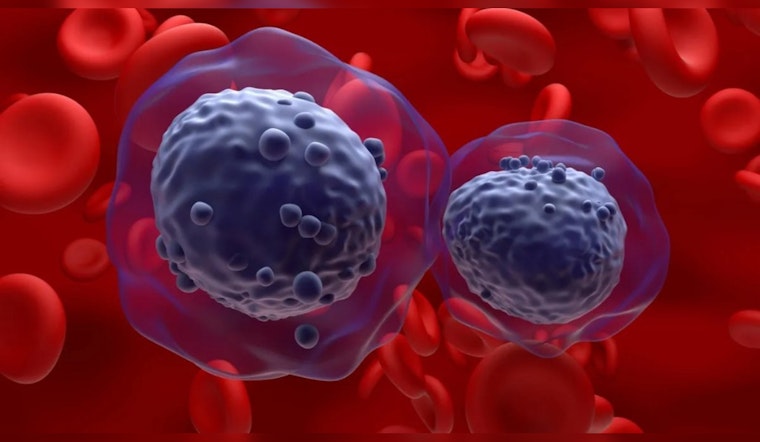
Scientists from The University of Texas at Austin have made a significant breakthrough in the fight against acute myeloid leukemia (AML), a particularly virulent cancer that originates in bone marrow. They discovered how the cancer cells fuel their growth, and in a pivotal experimental study, were able to slow down its proliferation without negatively impacting healthy cells, as reported by KXAN.
The study was directed by Xiaolu Cambronne from the Department of Molecular Biosciences, working alongside colleagues from Dell Medical School and the Department of Nutritional Sciences. "This is a new potential therapeutic target for a hard-to-treat disease," Cambronne told KXAN, acknowledging the notorious nature of the disease for its rapid growth and resistance to existing treatments.
Details published in the journal Cell Metabolism reveal that the cancer's aggressive behavior is due in part to the overproduction of a cellular transporter known as SLC25A51. This transporter functions by moving nutrients into a cell's mitochondria, analogous to a fuel line in a car engine. AML cells exhibit excessively high levels of this transporter, akin to an oversized fuel line which causes cellular replication to accelerate dangerously.
However, by experimentally reducing the transporter levels in animal models, the UT Austin scientists were able to throttle back the cancer's growth, resulting in extended survival times. "It appears that we can take these transporter levels back to a normal baseline, or even a little below that, and healthy cells are not negatively impacted," Cambronne explained in the university's coverage of the research. This suggests the potential for a more targeted therapy option for patients suffering from this briskly spreading cancer.
When this strategy was used in conjunction with 5-azacytidine, a chemotherapy drug routinely administered to AML patients, outcomes improved even further. The University of Texas detailed that this combination not only boosted survival rates but also substantially reduced tumor sizes, indicating an increased susceptibility of the cancer cells to the treatment.
Although there are currently no medications that can lower SLC25A51 levels, the team is hopeful that this research will pave the way for future drug development. In the meantime, the study utilized gene editing to regulate the transporter levels with precision. Funding for this potentially life-saving work was provided by the Cancer Prevention and Research Institute of Texas, the Pew Charitable Trusts, and the National Institutes of Health, among other contributors.





