

























































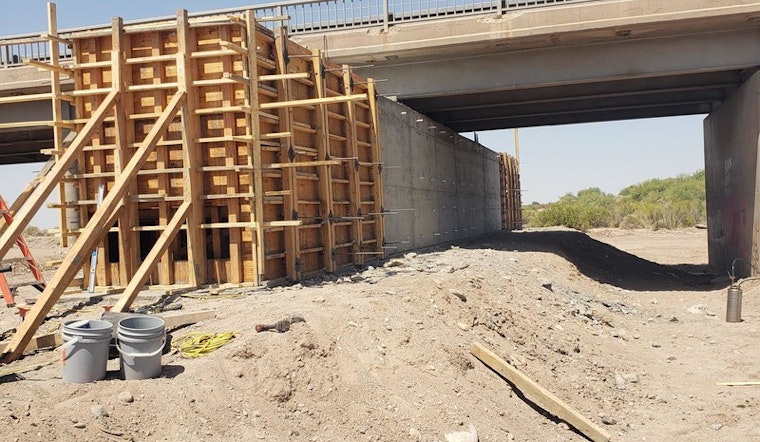
Arizona motorists can expect smoother rides in the coming years as the Gila River Bridge project launches, marking the initial phase of the Interstate 10 expansion—a move likely to tackle notorious traffic snarls, Construction is slated to begin in April to replace the decrepit bridges crossing the Gila River in the East Valley—the bridge will morph from two to three lanes in each direction, along with the construction of wider shoulders, according to Arizona’s Family.
Regarding safety and traffic flow improvements, U.S. Rep. Greg Stanton, a member of the Transportation and Infrastructure Committee, described the bridge as "unsafe for a long period of time, carrying not just truck traffic and all the people traveling between Phoenix and Tucson, but also larger trucks that are carrying cargo across the United States of America," this increased wear has made the project a priority; also noteworthy, the Gila River Indian Community's pivotal role is seen, with its leaders working alongside lawmakers for years to push the project to fruition, having inspected the bridge first-hand, Stanton and Gila River Indian Community Gov. Stephen Roe Lewis have discussed the critical needs for community safety.
ADOT's five-year, multi-billion dollar initiative outlines extensive highway expansions across Arizona including I-10's comprehensive extension from Phoenix to Tucson set for completion in 2028, as reported by Phoenix Business Journal.
One billion bucks will bolster the I-10 stretch between Phoenix and Casa Grande, I-40 will get a new interchange in Kingman, and US 93 will expand from two to four lanes in multiple segments. An additional $469 million is earmarked for enhancing highway safety and adding smart technology. Meanwhile, the state has not skimped on pavement care, allocating $40 million on top of ongoing improvement projects. Projects got moved around or joined the queue thanks to public feedback—one notable being an 11-mile revamp through Pinetop-Lakeside set for 2027, this reveals the community's direct influence on infrastructure strategy with funds primarily sourced from gasoline and diesel taxes and the vehicle license tax.





