

























































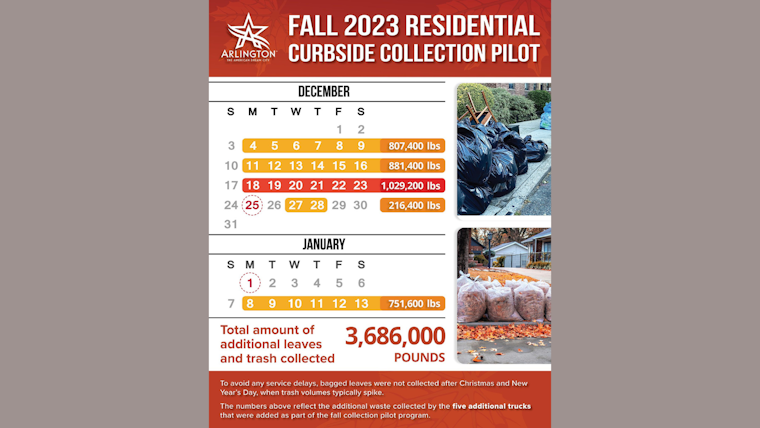
Arlington's streets got a serious sweep last year during the Residential Curbside Leaf Collection Program, which saw a staggering increase in collected yard waste. According to a Facebook post by the City of Arlington, more than 3,600,000 pounds of leaves and trash were rounded up—that's nearly triple the quantity of just one year prior.
The leap in collection amounts from 600 tons in 2022 to almost 1,850 tons in 2023 coincides with the city's decision to do away with drop-off sites in favor of a door-to-door collection service. The change has residents turning out in droves to dispose of their yard waste. With bags piled high at the curbside, the visual is a testament to a community's commitment to cleanliness—or at the very least, to getting rid of those pesky leaves.
In a landscape where environmental issues are increasingly at the forefront, programs like Arlington's serve as a reminder of the small, practical steps that municipalities can take to encourage proper waste disposal and contribute to sustainability efforts. By boosting accessibility to waste collection services, the city appears to have struck a chord with residents who might otherwise have let those leaves lie.
The jump in numbers does more than just tell a story of more leaves; it reveals how changes in municipal services can lead to significant community engagement. It's the kind of simple shift in operations that, while seemingly small, can have a measurable impact on the environment and the way a city functions—as long as the trash keeps making it to the curb.




