

























































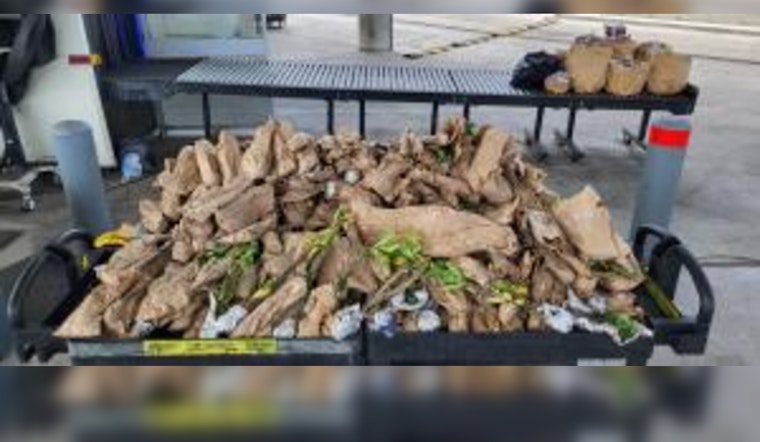
Nearly 300 concealed live plants have been seized in two incidents at the Juarez-Lincoln Bridge, as U.S. Customs and Border Protection officers cracked down on illegal agricultural imports. In the first bust, a Honda CR-V was found to be carrying 272 plants on Saturday, March 16, during a secondary inspection, according to CBP. The discovery led to a hefty $1,000 fine and the confiscation of the vehicle. Shortly after, a Chevrolet contained 19 additional undeclared plants, resulting in a $300 spot penalty.
Officials are vigilant in their efforts to prevent the introduction of potentially harmful, prohibited agricultural products, including plants and soil that could introduce unknown pests or diseases to U.S. agriculture. "These two significant agricultural enforcement actions help protect American agriculture from plant pests and diseases not known to exist in the U.S.," Port Director Albert Flores stated, as reported by FOX San Antonio. With these plants hidden under floor mats, within seats, and even in the spare tire compartment of the Honda, and under the seats of the Chevrolet, the meticulous work of CBP officers and agriculture specialists is proven vital.
The seized plants were not accompanied by the phytosanitary certification required for lawful importation into the United States. Such certification ensures that imported plants do not carry harmful insects, diseases, or other pests. The soil and compost are also inadmissible, as they could house soil nematodes and other harmful organisms. Penalties for attempting to bring these prohibited items ranged from $300 to $1,000, and could lead to traveler delays and penalties, as seen in these recent cases.
U.S. Customs and Border Protection, an agency within the Department of Homeland Security, has the daunting task of managing, control, and protecting the nation's borders. This incorporates the challenges of customs, immigration, border security, and agricultural protection between the official ports of entry. CBP's meticulous agricultural mission plays a crucial role in safeguarding American resources and ecosystems from invasive threats, something the recent busts at the Laredo Port of Entry have highlighted. Read more about the agency's ongoing efforts in protecting the country's agriculture here.





