

























































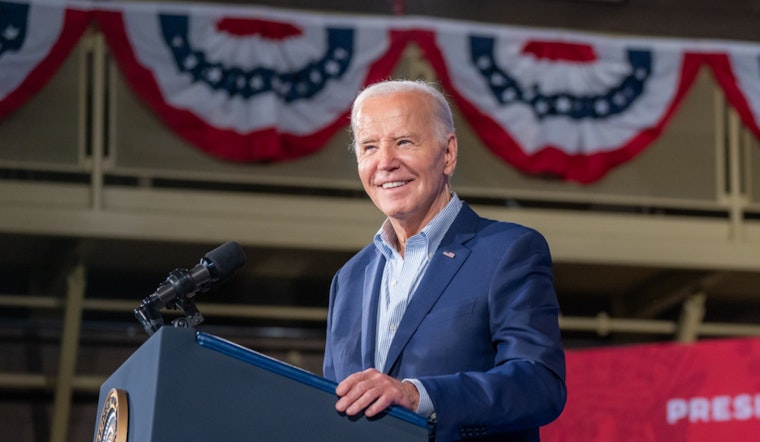
The Biden administration is doubling down on American semiconductor production with a hefty $8.5 billion investment in Intel, with Arizona, Ohio, New Mexico, and Oregon set to benefit. The cash injection was part of the CHIPS and Science Act, aiming to bolster the country's chipmaking prowess amidst global supply crunches and economic security concerns. The deal also involves an $11 billion loan package for the tech giant.
Recently visiting Intel's campus in Chandler, Arizona, President Joe Biden hailed the investment as a leap forward in remedying the country's lack of advanced chip manufacturing capabilities. As reported by ABC15, Commerce Secretary Gina Raimondo described the agreement as pivotal for the U.S. to capture 20% of global production of the most sophisticated chips by 2030, a significant jump from effectively zero.
In Arizona, the boost is expected to create about 9,000 new jobs, according to 12News reports. Intel plans to kickstart high-volume production of Intel 18A, its most advanced chip design, in the state. Senators Mark Kelly and Kyrsten Sinema, both from Arizona, lauded the investment as a significant boon for the economy, hinting at the bipartisan effort behind the legislation.
This federal backing comes amid President Biden's campaign to showcase his economic initiatives leading up to a possible election face-off against former President Donald Trump. With factory jobs and competition from China being hot election topics, Biden's administration touts this bold move as part of a U.S. manufacturing resurgence. Despite a recent poll by The Associated Press-NORC Center for Public Affairs revealing a tepid 34% approval rating for Biden's economic leadership, this investment might play a crucial role in changing public perception in the run-up to November's election.
Intel's expansion is not restricted to Arizona alone, with substantial investments mapped out for Ohio, New Mexico, and Oregon, as Intel's CEO Pat Gelsinger stated, the CHIPS Act represents the "most critical industrial policy legislation since World War II." With government support set to fuel up to $100 billion in capital investments by Intel over five years, the economic ripple effect could be significant. Biden administration officials have made it clear that without government backing, such aggressive scaling of domestic chip production wouldn't be feasible.
With strategic investments in workforce training and child care as part of the agreement, Intel has committed to bolstering the local economy in these states. The investment is expected to spawn a combined 30,000 jobs in manufacturing and construction, with Intel also planning to capitalize on tax credits from the Treasury Department for qualified investments, according to ABC15. These proactive measures aim to reinforce the United States' position in a cutthroat global semiconductor market, ensuring both economic growth and national security.


