

























































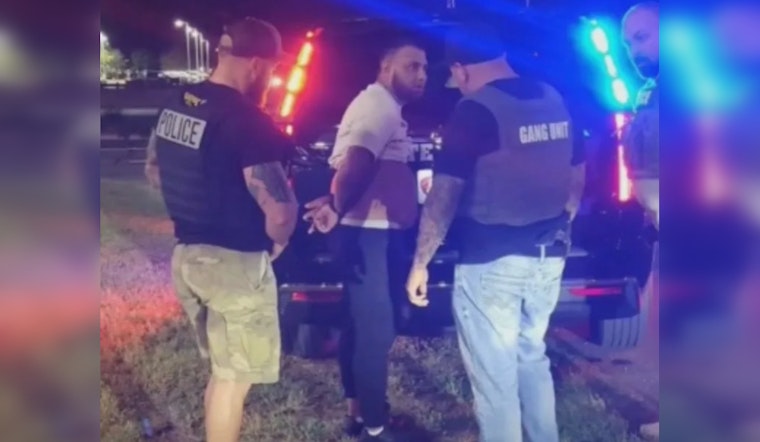
The quest for justice crossed international lines and landed squarely in Texas, where Colombian authorities can breathe easier with the capture of a notorious gang leader. Aderbis Segundo Pirela Pirela, aged 29 and most wanted in Colombia for a slew of horrific crimes, was nabbed outside of San Antonio in New Braunfels, as reported by FOX San Antonio. This alleged second-in-command of the nefarious Satanas gang now faces extradition back to his home country, where murder, drug trafficking, and extortion accusations await clarification.
Headlines splashed with Pirela Pirela's capture didn't just capture clicks; they shed light on the insidious spread of criminal enterprises that leap borders as if they were mere lines in sand. Confirmed by the Department of Homeland Security, Pirela from Venezuela, was originally arrested by U.S. Border Patrol near El Paso, TX, on January 2. Despite facing serious charges in Colombia, he was released with an order of recognizance, only to be recaptured by HSI San Antonio agents on March 12. The Bogotá Mayor, Carlos Fernando Galán, has since stressed the imperative for Pirela to face his crimes, warning, "It is necessary to guarantee that they do not continue to commit crimes from prison because that eventually generates what we are seeing here," according to a statement obtained by KENS5.
Details on Pirela's alleged crimes have surfaced through arrest warrants and sources close to the investigation. Among the appalling acts laid at his feet was the murder of a seven-year-old boy—a grim indicator of the excruciating lengths to which his criminal activities reached. Former Homeland Security Agent Ari Jimenez earlier reflected this year on the pattern of behavior seen in such gang members, whose very presence in the United States hinges not on the hopes of asylum but on the exploitation of crime.
The gap between Pirela's initial release and subsequent arrest raises questions and concerns, not just about the persistence of organized crime, but the fragility of checks and barriers supposedly designed to keep such dangers at bay. Pirela's flight from Colombia, through Central America, and ultimately to the U.S. border was part of a calculated move to extend his operational reach—a fact underscored by General José Daniel Gualdrón, commander of the Bogotá Metropolitan Police, in an interview with NEWS4SA. Now in the hands of U.S. Immigration and Customs Enforcement, the breadth and impact of Pirela's stint in the U.S. remain under scrutinous examination.





-4.webp?w=160&h=400&fit=crop&crop=edges)

