

























































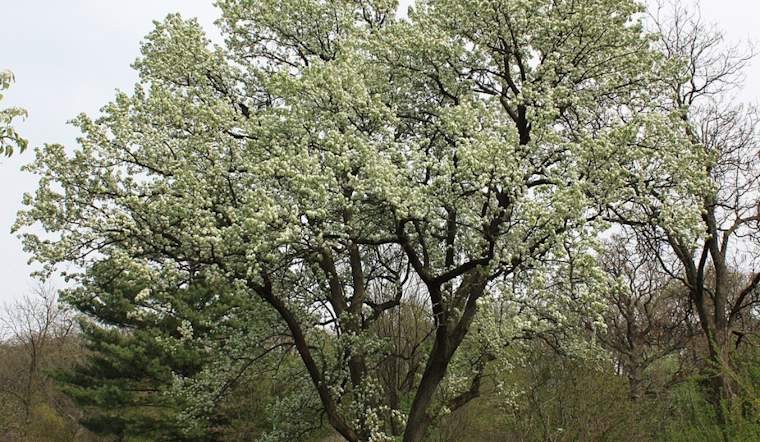
The streets of East Tennessee are lined with ornamental Bradford pear trees that, while pretty to look at, are causing more harm than good. According to Knox News, these trees, known also as Callery pears, have been recognized for their invasive nature and difficulty to remove—not to mention the unpleasant fish-like odor they emit when in bloom. Following the cracking down on the proliferation of these trees, initiatives have been started to ban their sale and planting, with legislation being proposed in states such as Missouri and Kansas.
Across neighborhoods, the white petals indicating spring's arrival are in fact a deceptive display of trouble. Along with their smell, Bradford pears are structurally unsound and prone to falling, threatening damage to homes and vehicles. Planted as sterile ornamentals back in the late '80s, these trees have managed to reproduce as birds spread their seeds, experts told WBIR. Their limbs, as the trees age, are a common culprit for property damage. Instead, gardeners are advised to plant more sturdy, native species.
And with native species in mind, Clemson University has stepped up the game with a "Bradford Pear Bounty" program, rewarding those who swap out their invasive Bradford pears for native replacements. The program limits exchanges to five per property owner but offers a variety of native saplings as alternatives. Property owners who wish to participate have to pre-register on Clemson’s website and are also responsible for the proper disposal of the removed trees, Fox Carolina reports.
As homeowners contemplate swapping out their Bradford pears, Clemson recommends consulting licensed tree professionals to safely remove the trees. Following the cuts, immediate application of herbicides like glyphosate or triclopyr is suggested, to prevent regrowth from stumps and large roots, said the university. Additionally, David Vandergriff, a horticulturalist, told WBIR, "You're doing our environment a favor if you got one that's still hanging on, to go ahead and get rid of it and replace it with a better tree that's going to be there long-term and has a lot more attributes for your landscapes and the environment."





